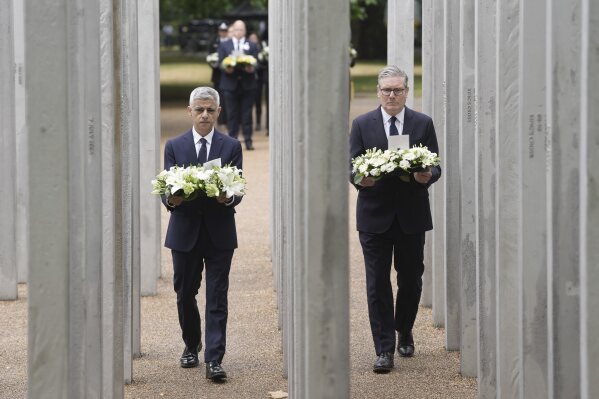
The visit had been scheduled long before the latest outbreak of fighting in the region, but the international crisis inevitably overshadowed the modest event.
Standing before a small group of local residents and staff, Starmer outlined Britain’s military and diplomatic response while also acknowledging the uncertainty facing thousands of UK nationals overseas.
The prime minister said Britain had deployed military assets including Type 45 destroyers, fighter jets and advanced defence systems to the region as part of wider security cooperation.
Concern for Britons in the Region
Starmer noted that around 300,000 British nationals are currently in the Middle East, including residents, tourists and travellers passing through the region.
“We are working with commercial airlines,” he said, explaining efforts to assist citizens seeking to return home, though he admitted the situation remained challenging.
The remarks came amid growing concern about how prolonged instability could affect global energy supplies and economic stability.
Economic Pressure at Home
The conflict has also intensified pressure on the UK government over the cost-of-living crisis, an issue Starmer has repeatedly pledged to address.
Speaking during the visit, the prime minister acknowledged that an extended conflict could have significant economic consequences.
“The longer this goes on, the more likely the potential for an impact on our economy,” he said, warning that the effects could reach “the lives and households of everybody and every business”.
Reeves Faces Economic Uncertainty
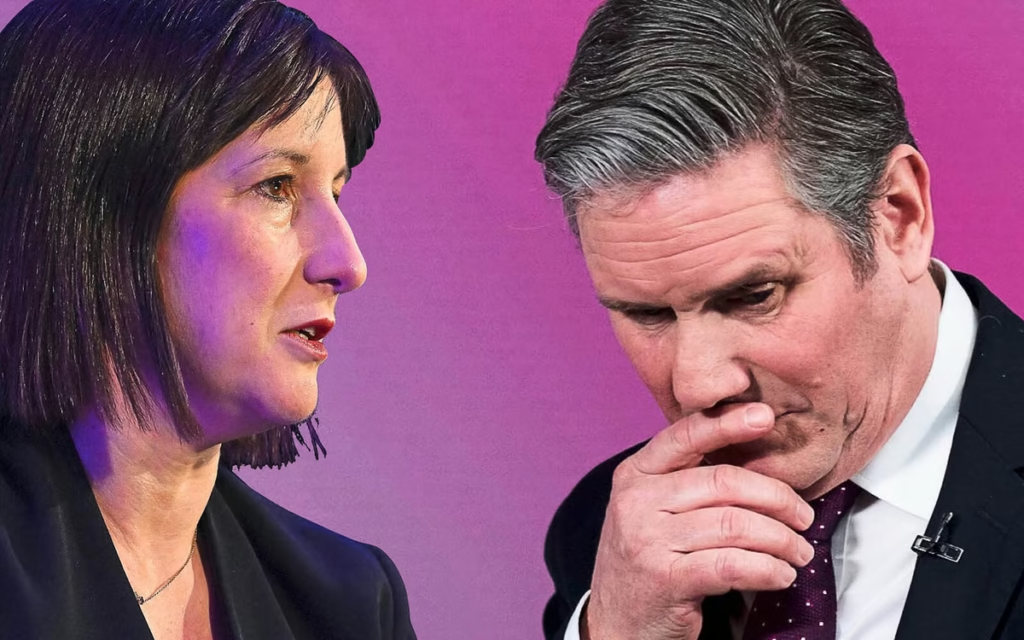
Later in Parliament, Chancellor Rachel Reeves delivered an economic update as concerns grow over rising energy costs and global market volatility.
She told MPs that she had been in discussions with fellow finance ministers from the G7 nations, stressing that her top priority was an immediate de-escalation of the conflict.
“The best way to keep prices at the pump low is rapid de-escalation,” Reeves said.
However, she acknowledged that predicting the economic consequences of the conflict remains difficult.
Limited Short-Term Measures
Reeves confirmed that the energy price cap for domestic bills would remain unchanged until June, offering temporary reassurance to households.
She also pointed to existing government support schemes, including the Warm Homes Discount and the temporary fuel duty cut, though both measures have already faced criticism for offering limited relief.
The chancellor additionally highlighted the rollout of a government fuel-price comparison website, designed to help drivers locate cheaper petrol stations.
Political Pressure Mounts
As the Middle East conflict unfolds, the UK government faces the challenge of managing both international diplomacy and the domestic economic fallout.
For Starmer and Reeves, the crisis has arrived at a delicate moment with ministers already under pressure to demonstrate progress on living standards while global events threaten to push prices higher once again.