
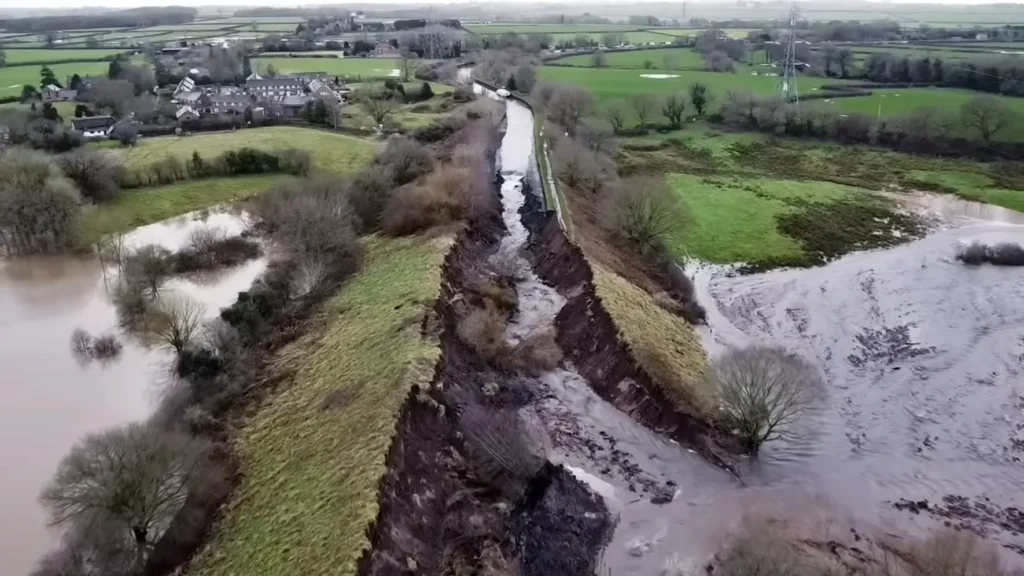
On 27 December 2025, the Llangollen Canal in Whitchurch, Shropshire, suffered a similar fate when water breached an embankment, causing three narrowboats to fall into a 50-metre crater.
Campbell Robb, chief executive of the Canal and River Trust, which manages most of the UK’s canals, explained that while catastrophic collapses are rare, the country’s waterways face hidden problems due to their age and the increasing pressure from climate change. The UK canal network spans roughly 2,500 miles, much of it more than 250 years old, and maintaining it is an expensive and complex task.
“Slowly, then all at once, might be the best way to describe a canal collapse,” Robb said. Most embankments are made of compacted earth and clay, and even small cracks can allow water to seep in, gradually eroding the soil. Heavy rain or droughts that crack the soil can further destabilise the banks, leading to sudden and dramatic failures. Culverts, drains, and human errors, such as a 2018 incident in Middlewich where a lock was left open, can also trigger collapses.
Recent technological innovations, including drones for above- and below-water inspections, are helping the Trust identify potential weaknesses. Nevertheless, some failures, such as the recent Shropshire collapse, occur despite inspections weeks earlier. Repairs are costly and time-consuming; the Shropshire breach is expected to take six to nine months to fix and may cost around £2 million.
Funding for canal maintenance is a growing concern. About a fifth of the Canal and River Trust’s funding comes from licensing and mooring fees, another fifth from government grants, and the remainder from commercial activities. The government grant, currently £52.6 million, will decrease by 5% annually from 2027, shrinking to £31.5 million by 2037, raising questions about long-term sustainability.
UK canals have a storied history. During the Industrial Revolution, they carried coal and goods across the country. At their peak, more than 5,000 miles of canals existed, but the advent of railways led to the decline of half of these waterways. In 1962, the British Waterways Board was created to maintain the remaining canals, and in 2012, responsibility for 2,000 miles was transferred to the Canal and River Trust.
Despite these challenges, usage of the canals remains high. Approximately 35,000 boats are registered, and towpaths are frequented by millions each year. Canals support around 60,000 jobs and contribute £1.5 billion to the economy through tourism and recreation. Residents and leisure users, like Paul Smith, who has lived on a narrowboat for 16 years, continue to navigate and enjoy the waterways despite periods of drought and occasional collapses.
Robb emphasised that adapting to a changing climate and innovating in maintenance are critical. “What happened in Shropshire is not normal,” he said, stressing the need for continued investment and vigilance to preserve both the historical and functional value of the UK canal network.