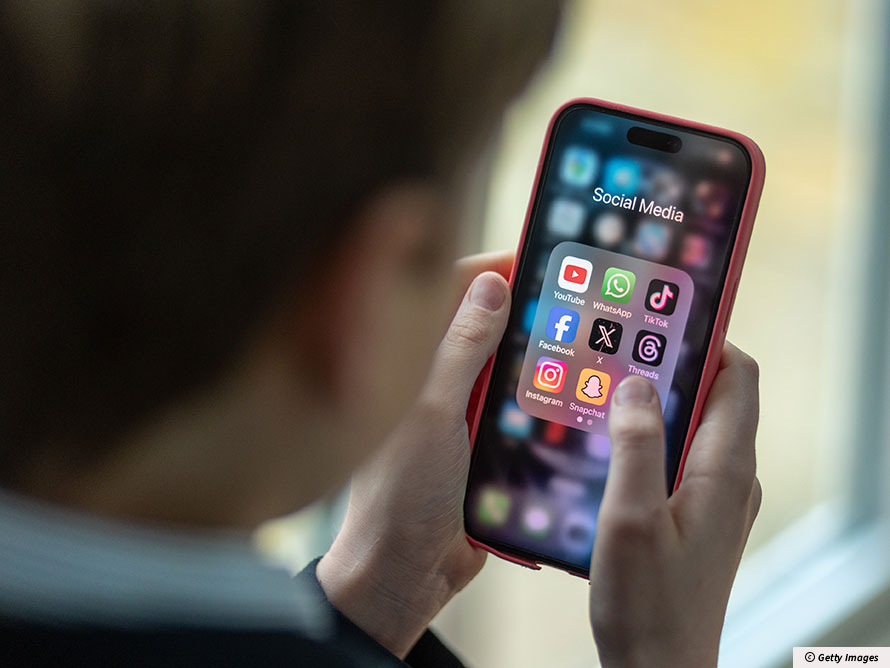
The amendment to the Children’s Wellbeing and Schools Bill, introduced by former Conservative minister Lord Nash, sought to impose an Australian-style restriction preventing under-16s from using social media platforms.
However, the measure was defeated in the House of Commons by 307 votes to 173, giving the Government a majority of 134.
Concerns Over Online Harm
Supporters of the proposed ban argued that parents are increasingly struggling to protect children from harmful online content and addictive platform design.
Advocates said many families face what they described as an “impossible position” when trying to manage children’s exposure to social media.
However, critics including the children’s charity NSPCC warned that an outright ban could have unintended consequences.
They argued that blocking teenagers from mainstream platforms might push them towards unregulated and potentially more dangerous parts of the internet.
Government Considers New Powers
Although MPs rejected the outright ban, Parliament supported a government amendment that could still allow restrictions in the future.
Under the proposal, Technology Secretary Liz Kendall could be granted new powers to regulate children’s access to digital platforms.
The powers could allow the Government to:
- Restrict or ban children of certain ages from using social media services and chatbots
- Limit the use of VPNs by children
- Disable addictive platform features such as autoplay
- Review or adjust the age of digital consent in the UK
Consultation Launched
During the debate, Education Minister Olivia Bailey said the Government had launched a public consultation to examine the issue more closely.
She told MPs that while many parents support a strict ban, other organisations fear it could make online safety harder to manage.
“That is why the Government has launched a consultation to help shape our next steps,” she said.
“The aim is to ensure children grow up with a safer, healthier and more enriching relationship with the online world.”
Divisions Within Parliament
The vote also exposed divisions within Parliament.
Labour MP John McDonnell broke ranks with the Government by voting in favour of the ban.
Meanwhile, more than 100 Labour MPs abstained, including Sadik Al-Hassan.
Speaking earlier, Al-Hassan compared the issue to public health regulation.
“As a pharmacist, I know that if a drug were causing such measurable harm for 78 per cent of users, it would be withdrawn, reformulated, or placed behind strict controls,” he said.
“We have an identifiable source, overwhelming evidence of harm, and the power to act.”
Debate Set to Continue
The defeat of the amendment does not end the debate. With growing international pressure following restrictions introduced in countries such as Australia and France, the UK Government is expected to consider further regulation of children’s access to social media platforms.