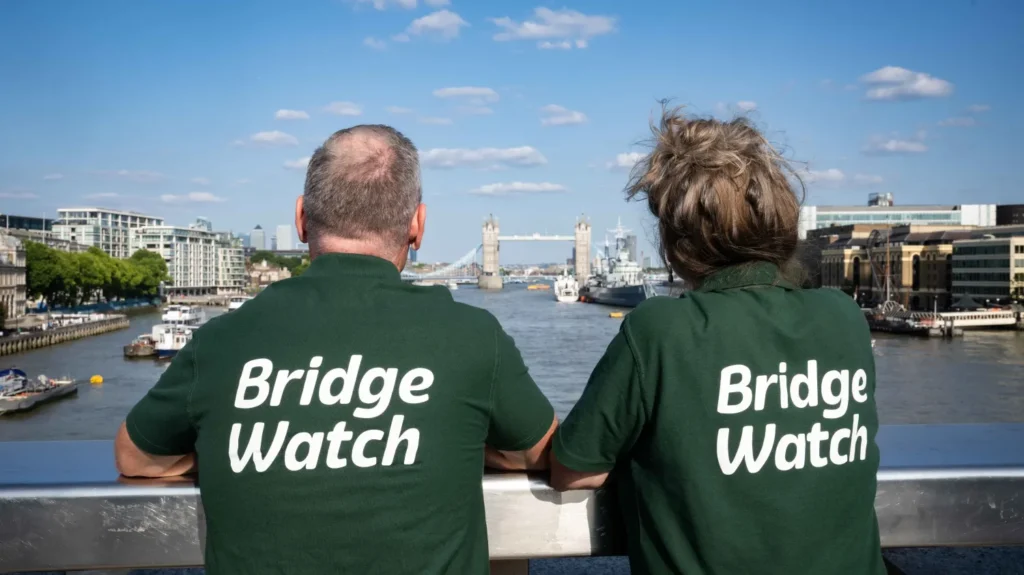
Nobody else seemed to notice him, but they had been watching for a while. The man stood by the bridge, staring into space. It was early morning, and something felt off. He had no phone, no company, and no clear reason to be there.
“Should we go?” the woman asked.
“Yes, we should,” replied the man.
Wearing their forest green vests, the volunteers walked up to him. After a gentle introduction, they asked directly, “Excuse me, are you thinking about taking your life?”
London’s bridges are famous for their beauty, history, and constant movement. Every day, millions cross them on their way to work or home. Yet, for some, these same bridges become places of despair. Around 27 people die by suicide in the River Thames each year. Many more would, if not for the fast response of the RNLI lifeboat teams and the Metropolitan Police’s river patrols.
The Birth of Bridge Watch
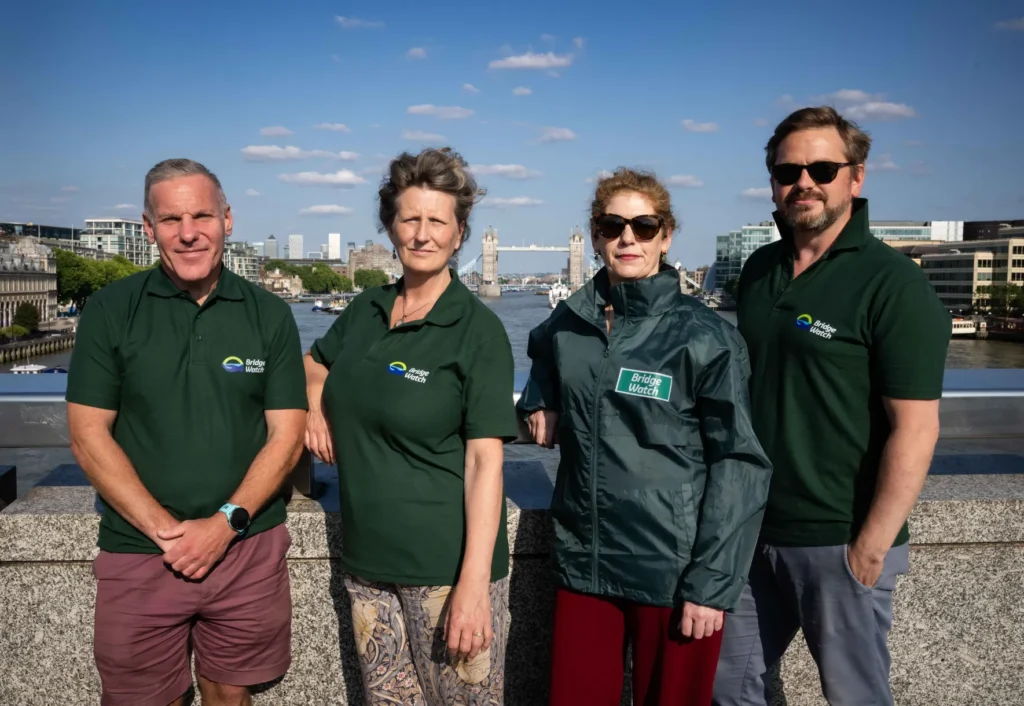
Bridge Watch, a volunteer initiative created by public health expert Claire Giraud, began in April last year. Managed by the Ascension Trust alongside partners such as the City of London Corporation and the Port of London Authority, the project is open to everyone. Its purpose is simple: to walk the bridges and embankments of central London and reach out to people who might be thinking about ending their lives.
One evening, I joined the volunteers. We met near a souvenir shop and were led by Paul Maloney, an energetic team leader with an infectious smile. “The goal is not to fix someone’s life in one conversation,” he explained. “It’s to listen, make them reflect, and perhaps help them choose differently.”
The Power of Asking
It can feel uncomfortable to ask someone directly if they are suicidal, but Maloney insists that it’s the right thing to do. Avoiding the question could mean losing the moment to help. “Suicide is not inevitable,” he said. “You can interrupt someone’s thoughts. That means you could save a life.”
Many people do not plan their attempts. Often, suicide happens in a moment of intense emotional pain after a major loss, such as the death of a loved one or the end of a relationship. Psychotherapist Rachel Gibbons says it is a mistake to view suicide only as a mental health issue. “Many people who die by suicide have no diagnosed illness. They are simply overwhelmed by sudden loss or distress,” she said.
Gibbons explained that asking someone directly can be life changing. “I once asked a man if he was suicidal. He said he was fine. When I asked again, he broke down and admitted he had planned to end his life the previous week.”
How Bridge Watch Works
The volunteers are trained to spot people who may be in distress, especially those who appear alone. They approach gently, start a conversation, and most importantly, listen. “It’s harder than you think not to interrupt,” said one volunteer.
If a situation becomes dangerous, the team calls emergency services but often continues the conversation because they already have the person’s trust. “We are a less threatening presence,” said Maloney.
Sometimes, these talks lead people to seek further help from charities such as The Listening Place, which offers free sessions for anyone struggling with suicidal thoughts. Chief executive Ben Ingber explained, “Most people who come to us do not want to die. They just find their current pain unbearable. We listen and help them find a reason to keep going.”
The Importance of Connection
London can be a lonely city. We often walk past people in pain without noticing, because to stop and care would slow us down. Bridge Watch challenges that habit by showing how a single act of kindness can change everything.
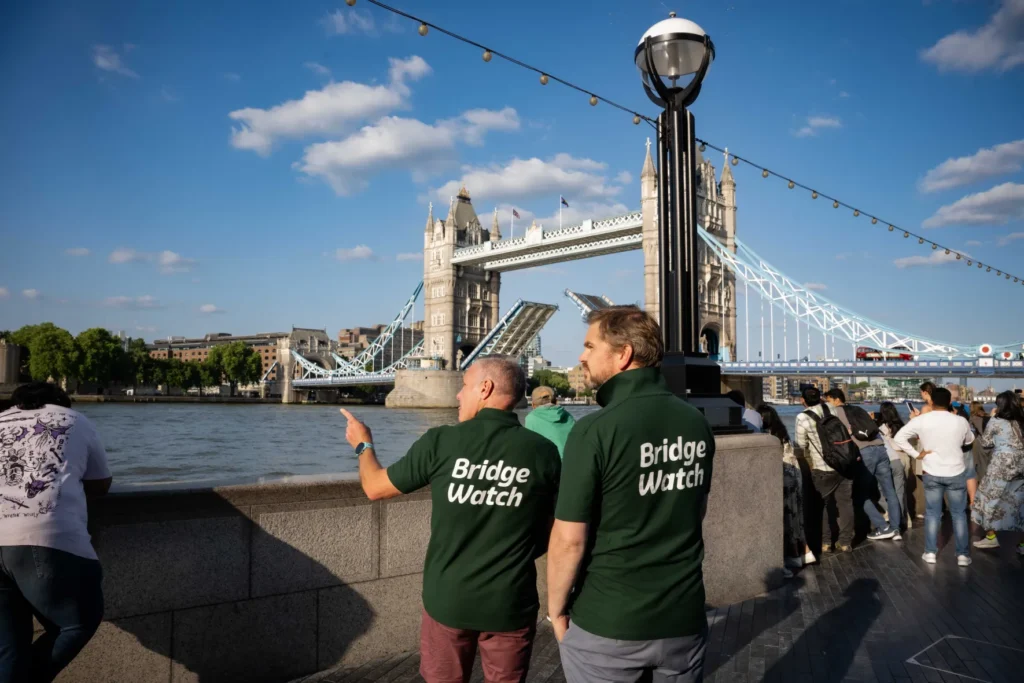
Maloney shared one powerful story about a man from Hungary who had been on the verge of ending his life. A volunteer’s dog reminded him of his own pet back home, which opened the door to conversation. They talked for hours, eventually getting coffee together. Later, the man sought help and turned his life around. Months later, Maloney ran into him again sober, smiling, and reconnecting with people who cared about him.
A Quiet Mission of Hope
Bridge Watch is not just about preventing tragedy; it is about reminding people that they matter. Every conversation, every question “Are you OK?” creates a space where someone feels seen.
For the volunteers walking London’s bridges, that small act of reaching out is proof that compassion still flows through this city, one life at a time.