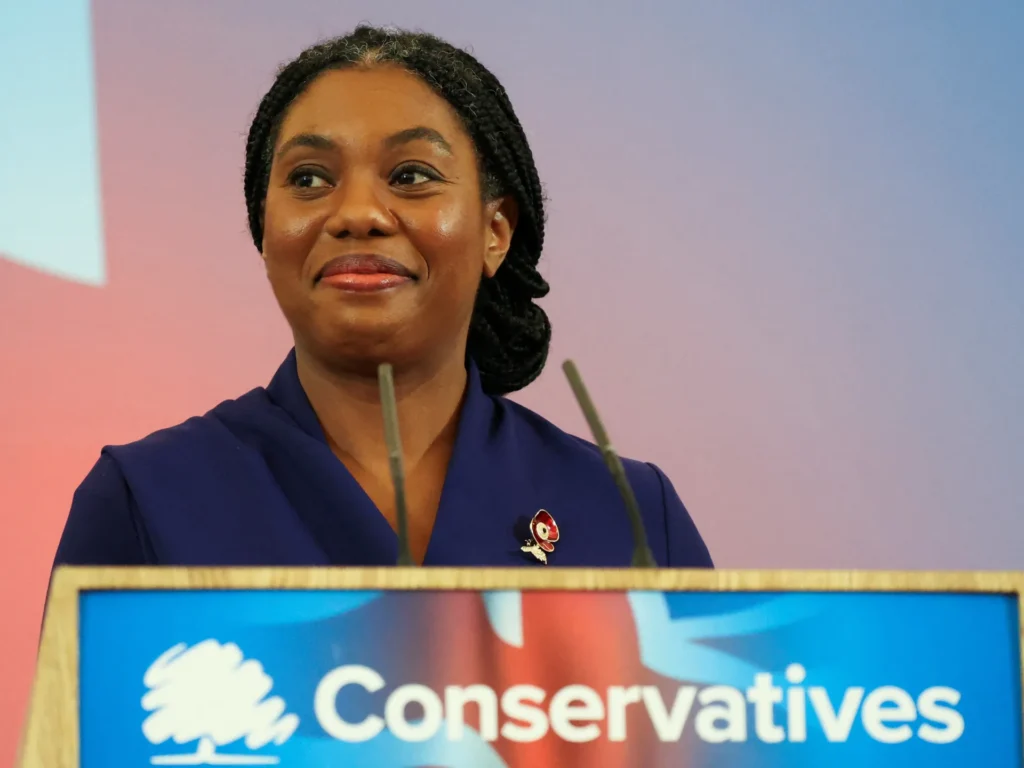
The warning came from former attorney general Dominic Grieve as Badenoch unveiled a series of hard-right policies aimed at reviving Tory fortunes in the face of Reform UK’s growing popularity under Nigel Farage.
Speaking at the Conservative Party conference in Manchester, Badenoch confirmed that, if elected, she would withdraw from the ECHR and deport up to 150,000 foreign criminals and illegal immigrants each year, though she offered no detail on where they would be sent.
The proposal follows earlier announcements that a Conservative government under her leadership would repeal the Climate Change Act and scrap net zero targets.
Grieve condemned the approach, saying: “I think it is a death wish for the Conservatives to essentially make them the same as Reform, making them indistinguishable.” He described the belief that leaving the ECHR would end the migration crisis as “complete fantasy”, adding that the convention has “only a marginal effect” compared with other international agreements.
He warned that such moves make the party appear “incoherent”.
With the Conservatives polling at around 16 percent less than half of Reform UK’s 34 percent, Badenoch used her conference speech to rally supporters, arguing that her policies would “bring the UK back together” through “strong borders and a shared culture”.
“Well meaning treaties and statutes like the European Convention on Human Rights and the European Convention on Action against Trafficking were drafted with the best of intentions,” she said. “But they are now being used in ways never intended by their original authors.”
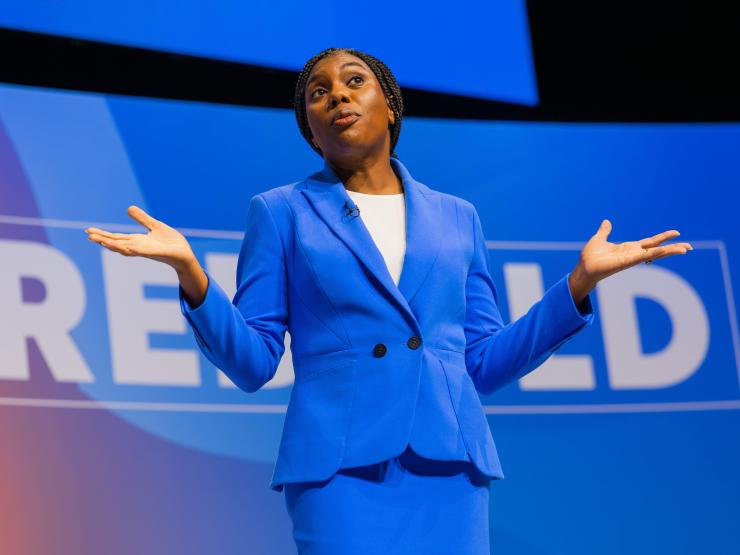
Badenoch also proposed the creation of a new deportation force modelled on the controversial ICE agency used in the United States under Donald Trump. In addition, she called for restrictions on protests supporting Palestine after a number of incidents involving antisemitic behaviour in Manchester, saying British streets must not become “theatre for intimidation”.
She told delegates: “We cannot import and tolerate values hostile to our own. You can think what you like and, within the law, say what you like, but you have no right to turn our streets into theatres of intimidation.”
Badenoch reaffirmed her support for the Jewish community, saying: “We stand with you shoulder to shoulder. You are part of the fabric of Britain and always will be.”
Despite her attempts to project optimism, the party conference was marked by low attendance and muted enthusiasm. Trains from London to Manchester were half empty, hotels offered off-peak rates, and several major corporate sponsors were absent.
The most crowded events were fringe meetings for Sir James Cleverly and Robert Jenrick both tipped as possible successors to Badenoch. A display celebrating Margaret Thatcher’s 100th birth anniversary, featuring her clothing and letters, occupied the main exhibition space typically reserved for sponsors.
Earlier in the day, Badenoch clashed with Laura Kuenssberg on the BBC over her deportation plans, dismissing questions about destination countries as “self-defeating”. When pressed, she implied that removals could include returns to countries such as Syria, Iran, and Afghanistan.
Attempting to distinguish her party from both Labour and Reform, Badenoch argued that only the Conservatives rejected “identity politics”.
“Both Labour and Reform deal in grievance and divide our country into tribes,” she said. “What Britain needs is national unity. I am black, I am a woman, I am a Conservative.”