
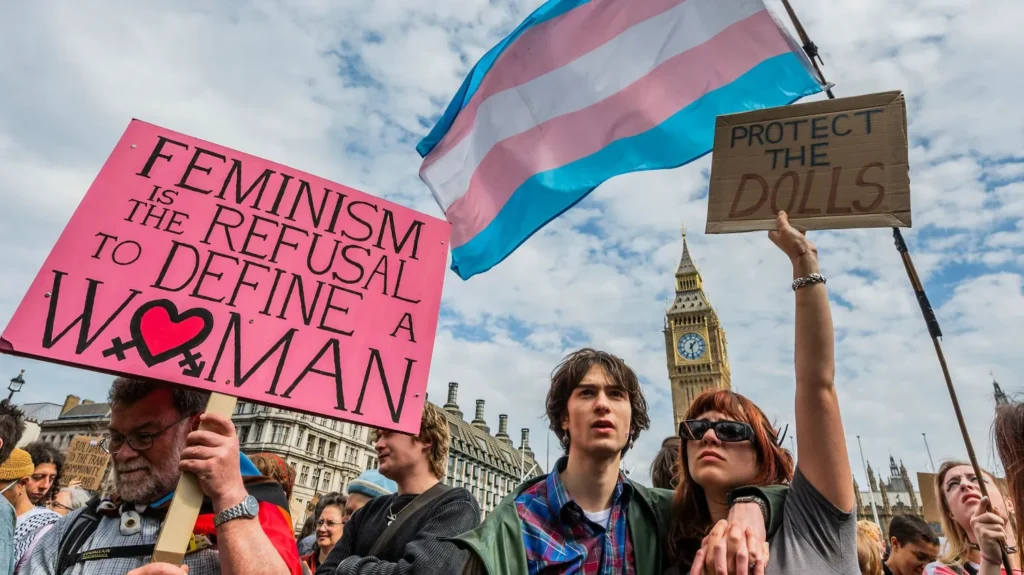
The Equality and Human Rights Commission (EHRC) submitted its draft guidance to ministers three months ago, but it has yet to be signed off and published by Bridget Phillipson, the women and equalities minister. The guidance is intended to clarify how organisations should apply the Equality Act following an April Supreme Court judgment that, for legal purposes, sex is defined by biological sex rather than gender identity.
In the absence of published guidance, councils, NHS trusts and private organisations continue to permit trans women biological men who identify as women to access single-sex female spaces. Many bodies have said they are waiting for official clarification before changing policies, despite warnings that current practices could place them in breach of the law.
Phillipson made a legal submission in September in a High Court case relating to an earlier draft of the EHRC guidance. In it, she argued that the law allows for “many plausible exceptions” in which people may use facilities designated for the opposite sex. Examples cited included allowing mothers to accompany infant sons into women’s changing rooms or permitting a pregnant woman to use men’s toilets to avoid long queues.
“These might all be considered to be obvious and commonsense factual scenarios,” Phillipson said in her submission. The final EHRC guidance is expected to outline how such exemptions interact with the Supreme Court ruling and the Equality Act.
A government spokesperson defended the delay, saying ministers were carefully reviewing a “legally complex” document. “The EHRC has submitted a draft code of practice to ministers and we are working at pace to review it with the care it deserves,” the spokesperson said. “This is a 300-page document, and it is vital we ensure it is legally sound. It would be catastrophic for single-sex services to follow flawed guidance and then face legal jeopardy again.”
However, opposition figures have accused the government of undermining the Supreme Court judgment. Claire Coutinho, the shadow minister for equalities, said: “Government lawyers, acting under Bridget Phillipson’s instruction, are attempting to rewrite the ruling that sex means biological sex. It is clear they have no intention of fully implementing the judgment.”
The ongoing delay has left public bodies uncertain about their legal obligations, fuelling criticism from campaigners on both sides of the debate and intensifying pressure on ministers to publish the guidance.