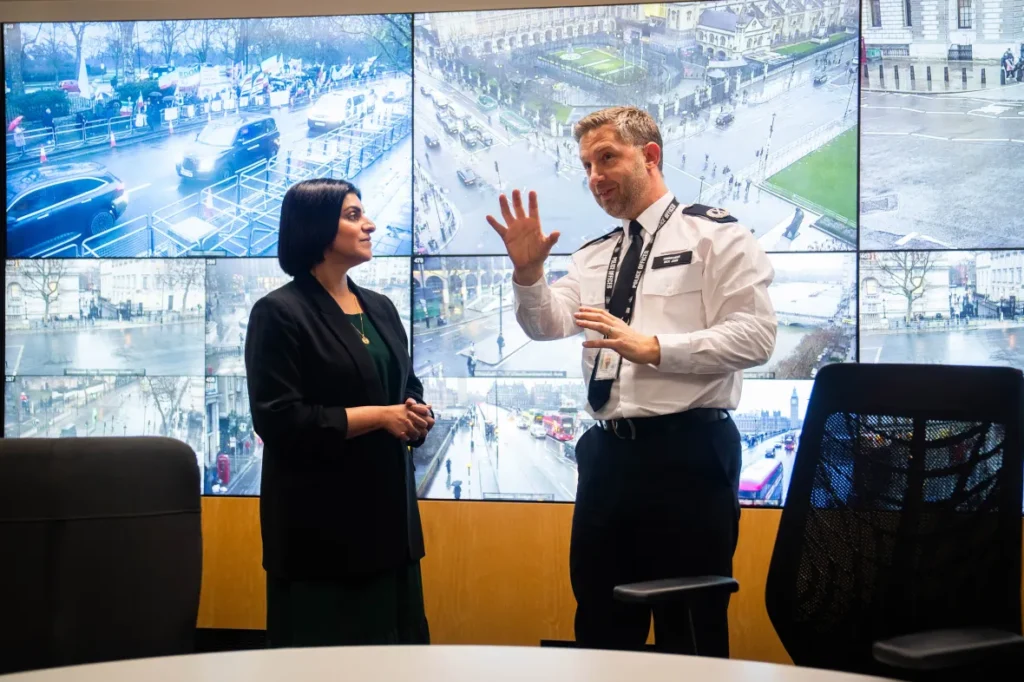
Chatbots will respond to victims of non-urgent crimes and the number of live facial recognition cameras will increase fivefold under a major expansion of technology in policing announced by the Home Secretary, Shabana Mahmood.
Unveiling a £141 million investment package, Mahmood said the reforms would form part of the largest overhaul of policing in England and Wales for 200 years, aimed at modernising forces and freeing officers from time-consuming administrative work.
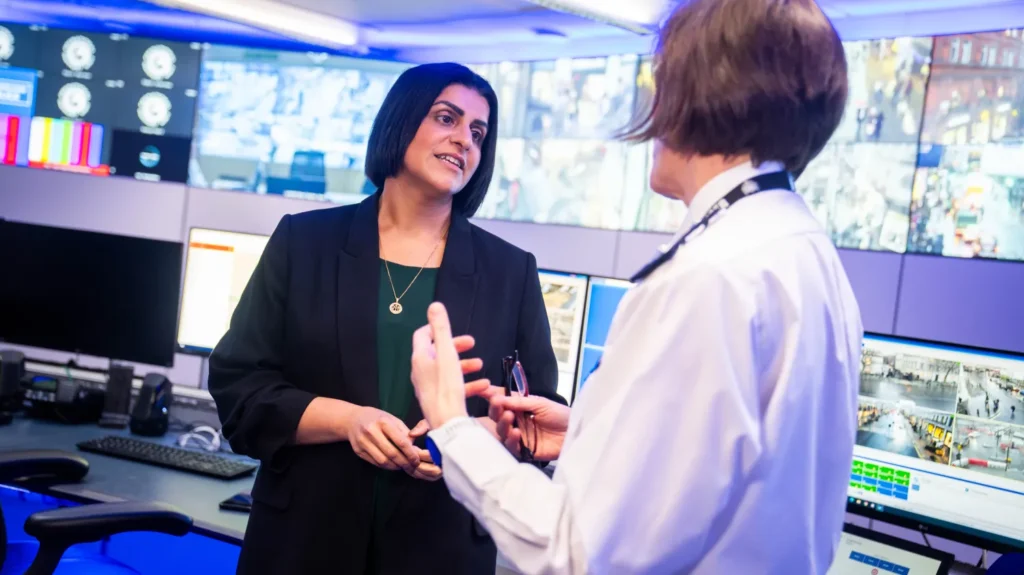
At the centre of the reforms is a new national artificial intelligence unit, Police.AI, which will oversee the use of AI across policing. The centre will focus on reducing the hours officers spend producing and redacting court files, analysing CCTV and body-worn camera footage, and handling routine public enquiries.
AI to Handle Non-Urgent Crime Reports
Under the proposals, AI chatbots will be used to triage non-urgent online crime reports and help determine whether calls to the 111 non-emergency service should be directed to a police officer, a call handler or another emergency service.
The Home Office said the changes could release six million policing hours every year, equivalent to putting 3,000 additional full-time officers back on the streets.
Facial Recognition Rollout Expanded
Mahmood also confirmed a major expansion of live facial recognition technology, with the number of police vans equipped with the cameras set to rise from 10 to 50. The technology will be made available to every police force in England and Wales this year.
Live facial recognition cameras scan crowds in crime hotspots and alert officers if a wanted suspect is detected. The Metropolitan Police has used the technology to arrest 1,700 criminals over the past two years, including rapists, robbers and domestic abusers, according to Home Office figures.
Writing in The Times, Mahmood described the technology as “as revolutionary to modern policing as fingerprinting was a century ago”.
Political Row Over Surveillance Technology
The expansion has drawn criticism from political opponents. Nigel Farage, leader of Reform UK, has argued that facial recognition is “going in the wrong direction” and likened its use to surveillance in China. Green Party leader Zack Polanski has described the technology as “dystopian”.
Mahmood rejected the criticism, pointing to the arrest of 30 registered sex offenders using live facial recognition during a single weekend operation by the Metropolitan Police.
“If that isn’t real crime, I would like Nigel Farage to tell us what is,” she said.
Safeguards and Limits on AI Use
Police leaders stressed that AI would not replace neighbourhood officers or be used to generate intelligence reports, following concerns raised after flawed AI-generated intelligence was used by West Midlands Police last year.
Matt Jukes, deputy commissioner of the Metropolitan Police, said technology would instead strengthen frontline policing by helping officers prioritise work and target offenders more effectively.
Officials also said facial recognition would continue to operate under strict safeguards, with footage deleted within seconds if no match is found.
National Police Service Planned
The reforms also outline plans to reduce the number of police forces in England and Wales from 43 to as few as 12 through mergers, alongside the creation of a National Police Service with responsibility for counterterrorism, fraud and organised crime.
The new body would be led by a national police commissioner, becoming the most senior police chief in the country.
However, the proposals have prompted concern from police governance figures. The Association of Police and Crime Commissioners warned that the plans would concentrate “unprecedented power” in the hands of the home secretary and the new commissioner.
Emily Spurrell, Labour’s police and crime commissioner for Merseyside, said the centralisation of power posed “enormous constitutional risks”.
Despite the criticism, Mahmood insisted the reforms were necessary to tackle increasingly sophisticated crime.
“Criminals are exploiting technology at pace,” she said. “Policing must change too.”