New analysis of official sales data for homes sold at £15 million or more in 2025 reveals a striking shift in the capital’s ultra-luxury housing market following Chancellor Rachel Reeves’ decision to abolish the long-standing non-dom tax regime in April. The move, which ended preferential tax treatment on overseas income, has triggered an exodus of some of Britain’s wealthiest residents and opened the door to a new global buyer class.
The non-dom status previously allowed affluent UK residents to declare their permanent domicile overseas, shielding foreign income from UK taxation. Around 68,000 people benefited from the arrangement, but estimates suggest up to 1,800 have left the country since its abolition.
Research by Beauchamp Estates, drawing on data from the LonRes property transaction database, shows that 65 per cent of the 41 super-prime homes sold in 2025 were disposed of by departing non-doms seeking to avoid sharply higher tax bills. Many have relocated permanently to low-tax hubs such as Dubai, Abu Dhabi, Monaco, Milan and Geneva, often downsizing to modest UK properties used only for short visits.
Despite an otherwise flat luxury market, the scale and value of properties sold have increased. The 41 super-prime transactions in 2025 were collectively worth £1.04 billion, compared with £856.5 million across 40 deals in 2024. Both figures, however, remain below the 2023 peak, when 54 homes sold for a combined £1.3 billion.
As non-doms exit, their place is being taken by buyers from the Middle East, the United States and China, most of whom are tax-resident elsewhere and view London properties as second homes or investment assets. These buyers tend to be younger, often in their late twenties to mid-forties and include tech entrepreneurs, financiers and members of royal families.
Jeremy Gee, managing director of Beauchamp Estates, said the surge in Middle Eastern demand was not driven primarily by domestic Gulf nationals. Instead, buyers increasingly originate from India, Pakistan, Yemen and Lebanon, having established residency in the UAE or Saudi Arabia before acquiring London properties.
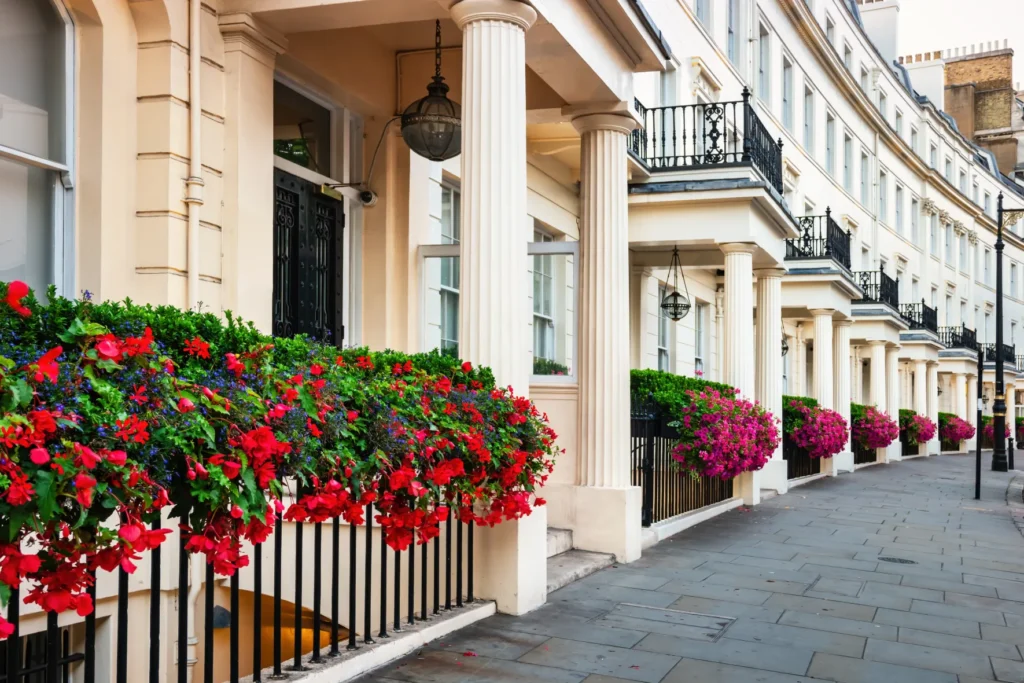
The trend has raised concerns that some of London’s most prestigious neighbourhoods could become sparsely occupied. Areas such as Belgravia, Knightsbridge and Mayfair risk evolving into enclaves of intermittently used homes rather than vibrant residential communities.
Gee warned that the growing imbalance between permanent residents and absentee owners could undermine London’s long-term competitiveness as a global capital, arguing that a sustainable mix of full-time residents and overseas investors is essential.
Official figures show Middle Eastern buyers accounted for 25 per cent of all £15 million-plus purchases in 2025, up from 20 per cent the previous year. These buyers also secured the steepest price reductions, negotiating average discounts of 7.6 per cent, the largest since before the pandemic as sellers adjusted to a sluggish mansions market.
American buyers represented 20 per cent of purchases, down from 25 per cent last year, while Indian and South Asian buyers accounted for a further 20 per cent. Chinese and Hong Kong buyers made up 13 per cent, Europeans 10 per cent combined, and British buyers just 12 per cent of the total.
The broader luxury market has been weighed down by successive tax changes that have increased the cost of owning high-value property. Overseas buyers can now face stamp duty bills of up to 19 per cent on second homes, alongside doubled council tax charges, adding to the deterrents for long-term occupation.
Data from Knight Frank underscores the slowdown. Sales of homes priced above $10 million in London fell from 316 in 2021 to 189 in 2025, while total market value declined from $5.76 billion to $3.88 billion. The firm’s prime index recorded a 3.6 per cent fall in top-end London prices over the year to the third quarter of 2025, ranking the capital 41st out of 46 global cities tracked.
Notwithstanding the slowdown, landmark transactions continue to shape the market. Knightsbridge, Kensington and northwest London have all seen a rise in super-prime deals, driven in part by proximity to elite private schools. Notable purchases include George Lucas’s £40 million acquisition in St John’s Wood and a £139 million sale of The Holme in Regent’s Park completed at a dramatic discount from its original asking price.
Developers report growing interest in new-build, “lock-up-and-leave” luxury schemes, with Arab buyers in particular favouring off-plan apartments over traditional period homes.
While the government’s forthcoming mansion tax applying to properties valued above £2 million is expected to dent mid-prime values, analysts believe it will have limited impact on the £15 million-plus segment, where annual surcharges represent a relatively small proportion of overall wealth.
What is clear, however, is that London’s super-prime housing market is no longer shaped by resident billionaires, but by globally mobile wealth transforming some of the capital’s most prestigious streets into luxury assets used for weeks, rather than years, at a time.