
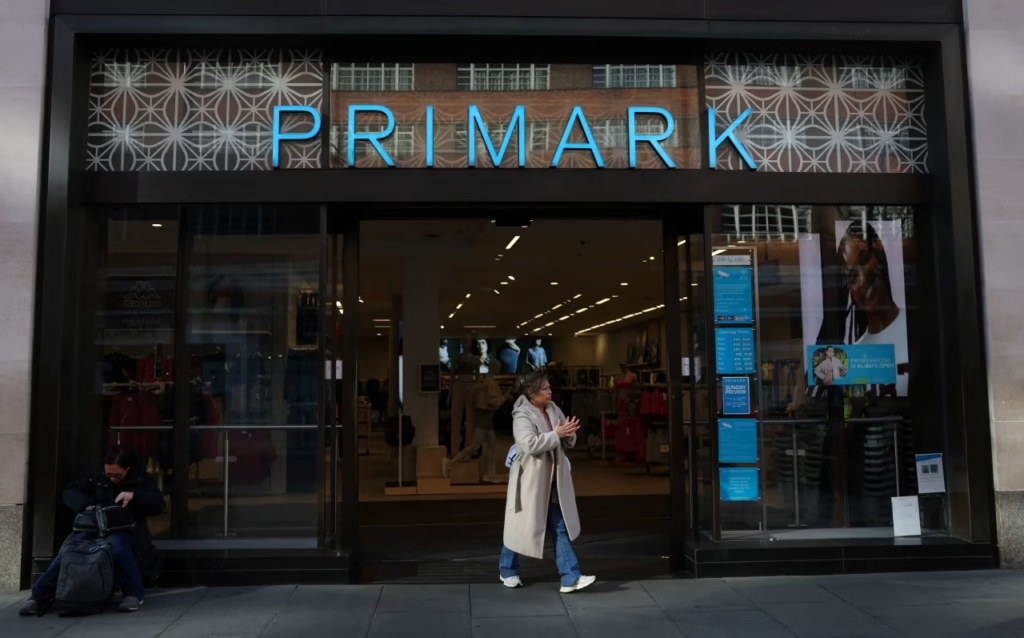
The company announced a strategic review of its group structure alongside its full-year financial results, which showed an adjusted pre-tax profit of £1.7 billion for the year to 13 September down 13 per cent compared with the previous year.
Sales at Primark rose 1 per cent year-on-year to £9.5 billion, buoyed by stronger trading in the second half of the year that helped offset a weaker start. However, the company noted “particularly weak shopping activity” among some customer groups, with like-for-like sales in the UK and Ireland slipping by 3.1 per cent.
AB Foods said spending picked up in the latter half of the year thanks to stronger womenswear ranges and increased digital engagement, following the rollout of Primark’s mobile app in selected markets.
However, gains in retail were offset by a 10 per cent drop in sales within the company’s sugar division, while sales in its grocery and ingredients arms were broadly flat. AB Foods’ food brands include Kingsmill, Twinings, Blue Dragon, Jordans and Ryvita.
Chief executive George Weston said the review reflected the company’s desire to highlight the strength of both sides of the business.
“Our unique and exceptional food business has historically been less well understood by the financial markets than Primark, yet it has a highly attractive portfolio, deep global expertise and much potential,” Weston said.
“Primark has an incredibly strong international brand, a powerful customer proposition, and substantial growth opportunities.”
AB Foods said no decision had been made but acknowledged that the review could lead to a full separation of Primark from the rest of the group.
Looking ahead, the company expects Primark’s consumer environment to remain subdued in the coming year, but said it would focus on competitive pricing and new store openings to drive sales growth.