
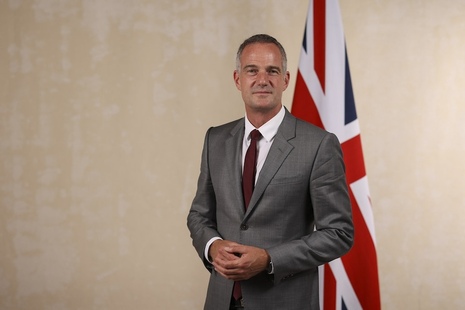
Speaking to Sky News, Kyle admitted that “some of the decisions” made since Labour took office have caused “some people to feel the need to leave.” He specifically pointed to rising taxes and the closure of non-dom tax loopholes as key factors influencing the exodus.
One high-profile departure is Lakshmi Mittal, the Indian steel magnate who has dominated the Sunday Times Rich List for over 30 years. Mittal, whose fortune peaked at an estimated £27.7 billion in 2008, co-owns Chelsea Football Club and previously donated £5 million to Labour. His exit underscores the effect of Labour’s tax reforms on the UK’s super-rich.
Kyle acknowledged the broader implications, noting that the concern extends beyond billionaires. Entrepreneurs and start-ups are also leaving in search of better funding opportunities abroad, particularly in the United States. To address this, the government has focused on recapitalising UK markets and supporting scale-up companies.

Official statistics support Kyle’s concerns. The Office for National Statistics recently revised its data, revealing that 257,000 British nationals left the UK in the year ending December 2024, compared with the previous estimate of 77,000. This represents more than a threefold increase and highlights a growing trend of outward migration.
The news comes ahead of Chancellor Rachel Reeves’ second budget, which is expected to introduce further measures targeting the wealthy, including a potential mansion tax on properties over £2 million. Reeves’ first budget included increases to capital gains tax, reductions in entrepreneurial tax relief, and new rules for passing down family businesses.
Kyle defended the government’s approach, emphasising initiatives designed to attract global talent. These include the establishment of a global talent task force and a global talent visa aimed at bringing highly skilled individuals to the UK. He acknowledged that while some are leaving due to tax changes, others are arriving to take advantage of investment in emerging sectors such as artificial intelligence.
In summary, while Labour’s tax reforms are prompting some wealthy individuals to leave the UK, the government is simultaneously working to foster an environment that attracts global talent and supports innovative businesses.