
The consultancy also highlighted slightly lower-than-expected increases in levies for power transmission networks and reductions in wholesale energy prices, partly due to rising liquefied natural gas (LNG) supplies from the US and optimism about a potential Russia–Ukraine peace deal that could restore more Russian gas to global markets.
Previously, Cornwall Insight had projected household bills would increase to £1,815 per year from April. The latest forecast indicates a further fall in July 2026 when the price cap is next reviewed.
Government Strategy and Net Zero Goals
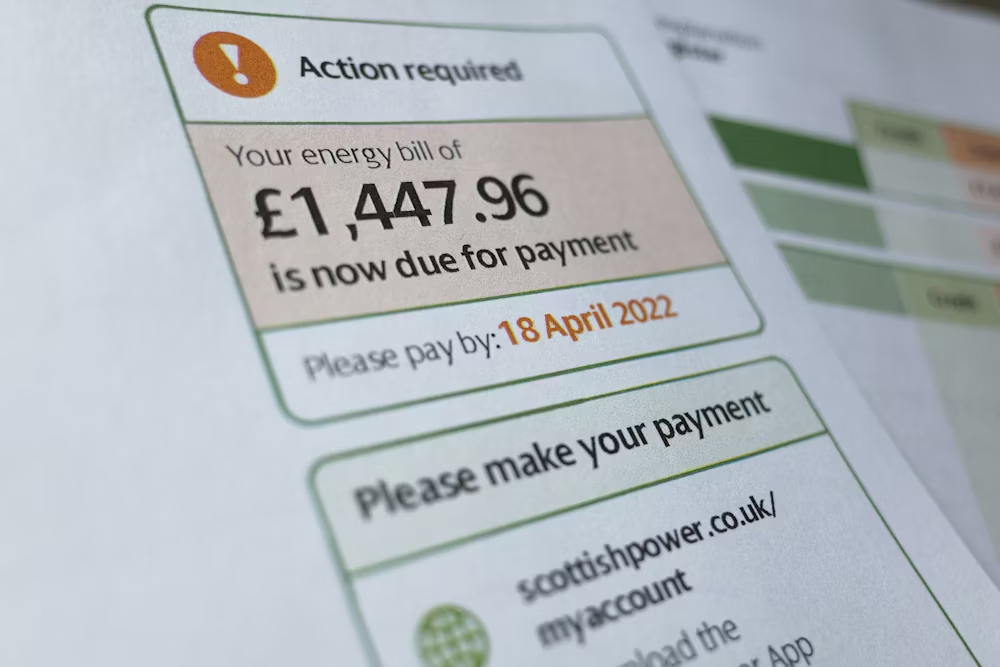
The predicted decrease aligns with the government’s manifesto pledge to cut energy bills by up to £300 a year. The energy price cap, introduced in 2019, limits the unit rates suppliers can charge for electricity and gas but does not cap total bills. Ofgem updates the cap quarterly to reflect the costs of efficient suppliers. Currently, the cap stands at £1,755, rising slightly to £1,758 in January.
Craig Lowrey, principal consultant at Cornwall Insight, warned that while households will see relief, costs are being shifted rather than removed. The government’s move to fund 75% of the renewables obligation through taxation for three years is intended to reduce pressure on bills, though the public ultimately remains responsible for funding the policy.
Additionally, the government scrapped the Energy Company Obligation, an insulation and energy efficiency program plagued by poor-quality installations.
Challenges Remain
Despite the forecasted fall, energy bills remain high compared to pre-crisis levels. Over six million households in fuel poverty face ongoing pressures, with domestic energy debt reaching £5.5 billion. Energy UK highlighted the need for a comprehensive plan to reduce bills further and protect the most vulnerable, including targeted support schemes and continued efforts to lower electricity costs relative to gas.
Ed Miliband, the Energy Secretary, plans to launch a Warm Homes Plan in the coming weeks. Measures under consideration include encouraging heat pump installations by subsidising electricity bills while increasing gas costs through a proposed £30 levy on gas bills to fund the shift to low-carbon heating.
Long-Term Outlook
The transition to net zero emissions by 2050 remains a politically contentious issue, with some parties citing high costs. Energy suppliers warn that policy costs to support decarbonisation, such as subsidies for new wind farms and expanded electricity transmission networks, could push bills higher in the coming years.
Lowrey stressed that a sustainable approach to clean energy is necessary to protect households from volatile global energy markets, even as the short-term focus is on reducing bills. Vulnerable households must be shielded to ensure the benefits of net-zero strategies reach those most in need.