
Data from the Office for National Statistics (ONS) showed public sector net borrowing, the gap between spending and income stood at £11.7bn last month. Although this was £1.9bn lower than in November a year earlier, it exceeded City expectations of a £10bn deficit.
Tom Davies, a senior statistician at the ONS, said the figure marked the lowest November borrowing for four years, despite an increase in spending. He attributed the year-on-year improvement largely to stronger tax and national insurance receipts, but warned that borrowing across the financial year remained higher than last year.
In the eight months to November, borrowing reached £132.3bn, £10bn more than in the same period of 2024 and the second-highest level on record for that point in the year, surpassed only during the Covid pandemic in 2020.
The figures came a day after the Bank of England cut interest rates for the sixth time since August last year, offering some relief to borrowers in the run-up to Christmas. However, economic momentum has weakened in recent months, with uncertainty ahead of the 26 November budget weighing on household spending and business investment.
Official data show GDP unexpectedly contracted in October, while the Bank of England has warned that economic growth is likely to flatline in the final quarter of the year.
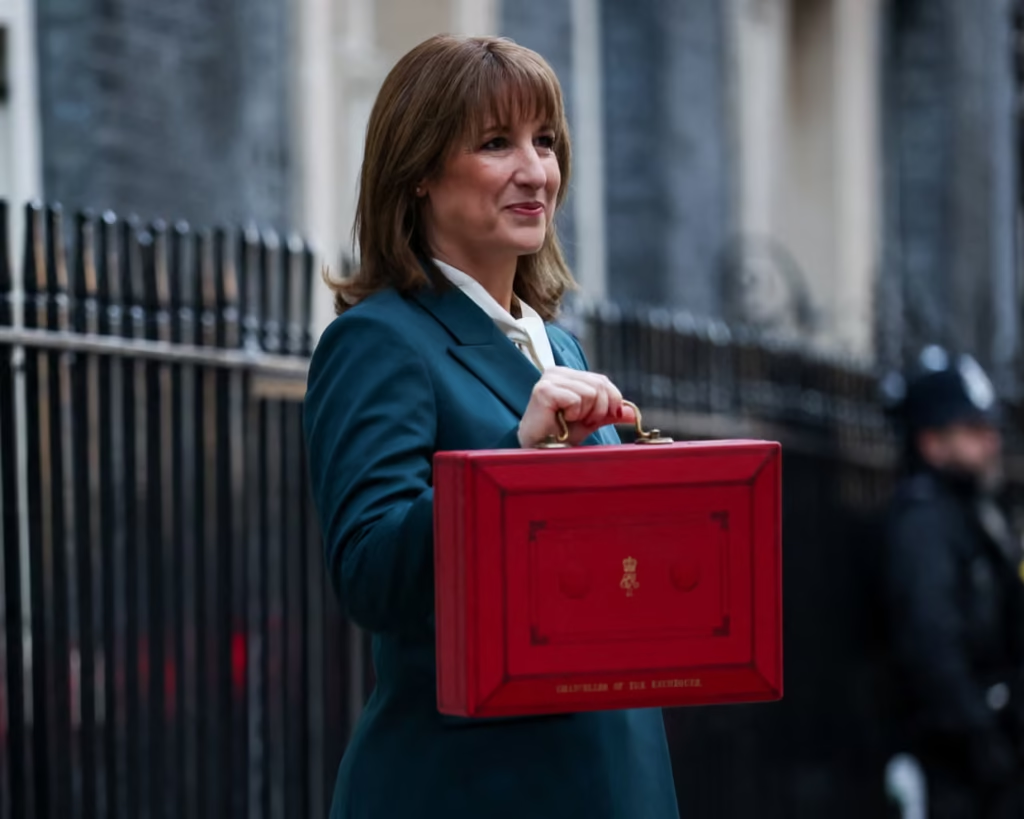
After months of speculation over whether she would breach her self-imposed fiscal rules, Reeves used the budget to increase her headroom against her main stability rule to £22bn, providing a buffer against further deterioration in the public finances.
James Murray, the chief secretary to the Treasury, said the government remained focused on controlling debt. “£1 in every £10 we spend goes on debt interest money that could otherwise be invested in public services,” he said, adding that the budget was designed to reduce borrowing over time.
The ONS figures showed that compulsory social contributions rose by £3bn year-on-year to £17.2bn in November, following changes to employer national insurance rates introduced in April. For the year to date, social contributions totalled £131.2bn, up £21bn on the same period last year.
November is traditionally a high-spending month for the government due to winter fuel payments. Net social benefit spending increased by £1.5bn to £26.8bn, driven by inflation-linked rises and the state pension triple lock.
Public sector net investment also climbed by £1.9bn compared with a year earlier, largely reflecting a £1.6bn payment towards the Hinkley Point C nuclear power station under a long-standing agreement with EDF.
Elliott Jordan-Doak, a senior UK economist at Capital Economics, said the higher-than-expected borrowing figure suggested fiscal concerns would soon return to the fore. He warned that Reeves’s strategy relied heavily on significant tax rises later in the forecast period, calling the public finances “weak”.
Mel Stride, the shadow chancellor, criticised the government’s approach, arguing that borrowing remained at historically high levels outside the pandemic. He accused Labour of increasing debt through what he described as reckless spending decisions, warning that the burden would fall on future generations.