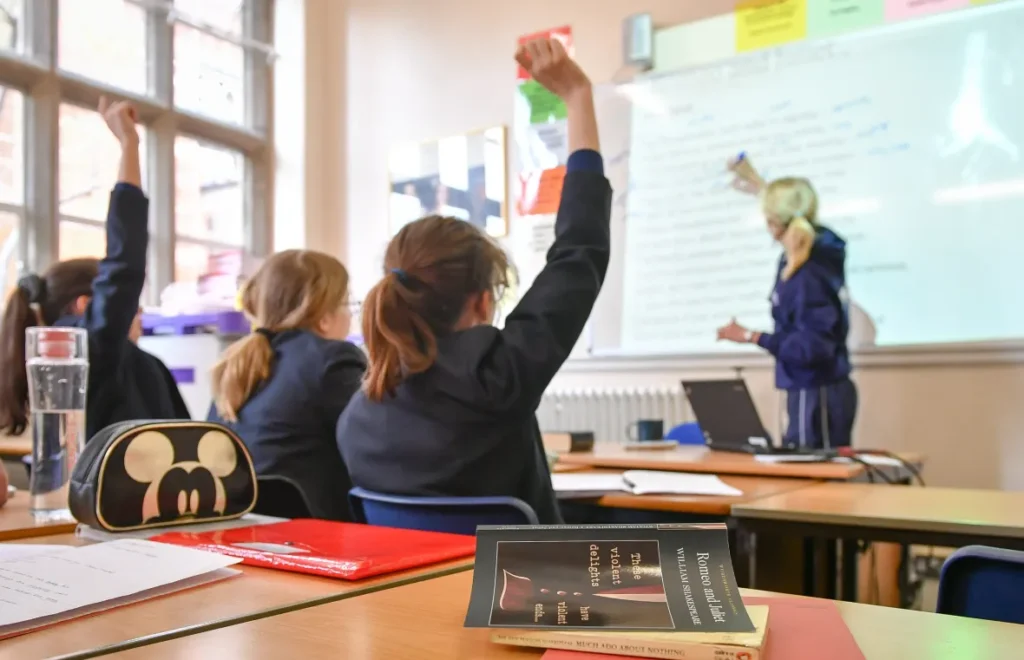
A major survey by the Scottish Secondary Teachers’ Association (SSTA) found that just 22 per cent of teachers believe their school has a clear disciplinary system in place to deal with troublemakers.
Instead, most schools rely on nurturing or restorative approaches where pupils and victims of incidents are encouraged to talk through problems with three-quarters of respondents saying such methods are now common practice.
However, fewer than 3 per cent of the 1,115 teachers surveyed said pupil behaviour had improved since the Scottish Government launched its behaviour action plan in August 2023. Many said schools were no longer treating verbal abuse or defiance seriously.
“It used to be the case that pupils were automatically suspended for swearing at staff,” one teacher said. “Now it happens all the time and little is done beyond a call home. Pupils act with impunity there are no real consequences.”
Another respondent called for “harder sanctions”, warning that teachers felt “powerless” in the face of worsening behaviour.
The survey found defiance and refusal to work to be the most widespread issues, cited by almost 90 per cent of staff. Other problems included verbal aggression (41 per cent) and pupils wandering classrooms or corridors (64 per cent) both up sharply from previous years.
Only 13 per cent of teachers said their school had a senior staff member specifically responsible for managing behaviour, while half said headteachers or deputies were routinely called in to handle incidents.
The SSTA’s general secretary, Seamus Searson, said teachers were desperate for stronger leadership and consistency in discipline.
“The biggest issue is that there are no consequences,” he said. “Teachers have to persuade pupils to follow the rules instead of being able to insist on them. The basic order that used to exist in schools has been forgotten.”
While the government’s action plan set out 20 steps to improve behaviour through to 2027, the SSTA said it had been too vague about punishments and enforcement.
According to the union, 88 per cent of teachers feel it has made no difference to classroom discipline.
The Scottish Government said violence or abusive behaviour in schools was “completely unacceptable” and that guidance had been co-produced with unions and headteachers to support staff in responding to individual needs.
Education Secretary Jenny Gilruth has written twice this year to local authorities urging them to review their behaviour policies.
However, many teachers believe the current approach is too soft and fails to protect both pupils and staff. One teacher wrote:
“There are no real sanctions for repeated misbehaviour. Teachers face verbal and physical abuse and are not being supported.”
Another added:
“We’re reaping the consequences of a generation raised on soft parenting and schools are now paying the price.”