
Top of Form
Bottom of Form
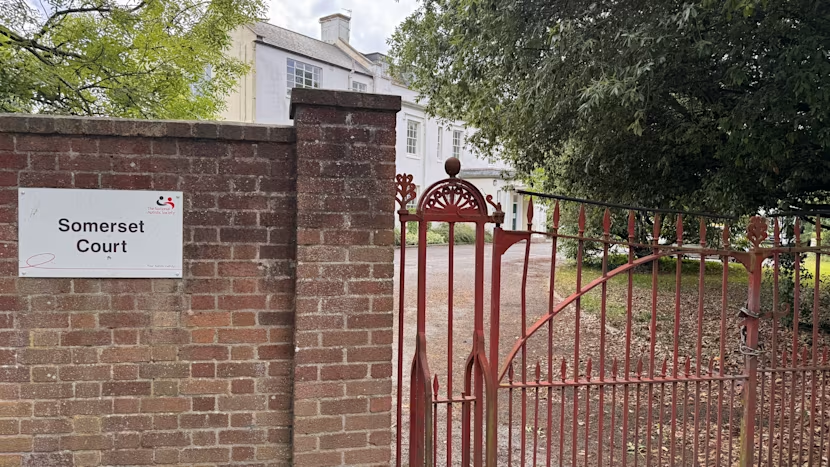
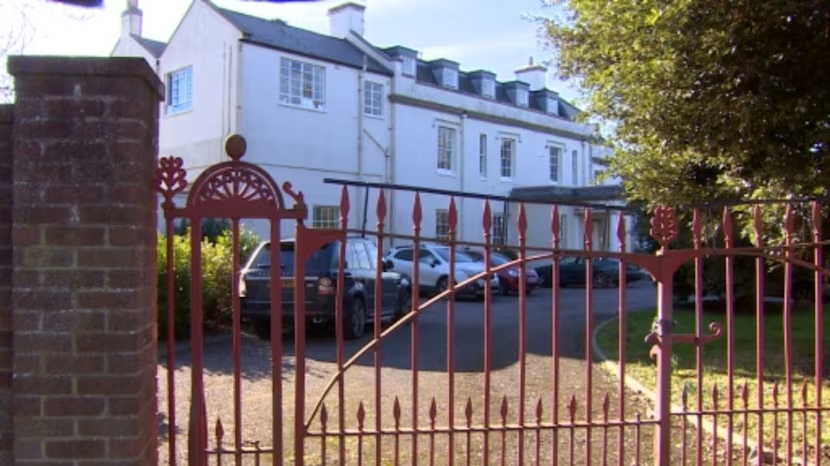
A woman who had lived at a Somerset care campus for people with autism since she was 15 has died in circumstances now deemed preventable. A recent review as reported by ITV News has uncovered serious safeguarding failures at the site, which is operated by the National Autistic Society.
An independent Safeguarding Adults Review, issued by the Somerset Safeguarding Adults Board, found that her death could have been avoided. The report cited major failings in her care, including inadequate risk management, poor coordination among care teams, limited involvement of her family, and a failure to follow her established health care plans.
Notably, these lapses occurred just one year after another critical safeguarding review revealed abuse at Mendip House—a separate residential unit on the same site also run by the National Autistic Society.
Staff at Mendip House humiliated and belittled residents under their care
Although the 2018 Mendip House abuse scandal drew national attention, the review concluded that the necessary lessons were neither absorbed nor applied throughout the rest of the care campus.
Hazel’s residence faced a high turnover of staff, frequent use of agency carers unfamiliar with her specific needs, and a lack of consistent oversight—factors that were especially harmful for someone who depended on structure and predictability to manage her anxiety.
The report also criticised the failure of agencies to coordinate effectively, address repeated safeguarding concerns, or include Hazel’s family in decisions about her care. It highlighted the absence of advocacy during key moments in her care planning.
Recommendations from speech and language therapists regarding Hazel’s risk of choking were known but not adequately shared with all staff members involved in her care.
Following her death, a local Multi Agency Risk Management (MARM) framework has been introduced. Nationally, the government is phasing out campus style care models like the one Hazel lived in as part of the Transforming Care initiative.
The review urges immediate reforms to ensure that people with disabilities placed far from home are subject to stronger oversight and regular reviews. It also calls for compulsory training in both dysphagia and autism for all care workers, particularly those employed through staffing agencies.
Professor Michael Preston Shoot, Independent Chair of the Somerset Safeguarding Adults Board, stated:
“The Somerset Safeguarding Adults Board exists to protect people at risk of abuse and neglect and to make sure lessons are learned so that necessary improvements can be made.”I want to take this opportunity to offer Hazel’s family my sincere condolences for their loss.”
He added: “Hazel’s tragic story has highlighted that further work is required to sharing information across our organisations to safeguard those with support & care needs and learning disabilities in Somerset.
“I am pleased to see that the organisations involved were open to these improvements and lessons have been learned with many changes having already been implemented. I will now work with SSAB partners to ensure that this learning becomes normal practice.”
The National Autistic Society said in a statement: “Hazel’s death was a tragedy and an unimaginable loss for her family. Our thoughts and sympathies continue to be with them.
“Hazel lived with us for over 40 years in one of our residential homes, and her loss was felt very deeply by the staff who cared for her.
“We accept the findings and recommendations of the Safeguarding Adults Review. Following Hazel’s death in 2019, we reviewed and updated policies and systems locally and nationally.
“This included briefings, hosting workshops and rolling out additional training, especially around the risks of choking.
“Over the past six years, we have continually strengthened our leadership and oversight to ensure that the safety and wellbeing of the people we support is, and always will be, our absolute priority.”
Culled from itvNEWS