
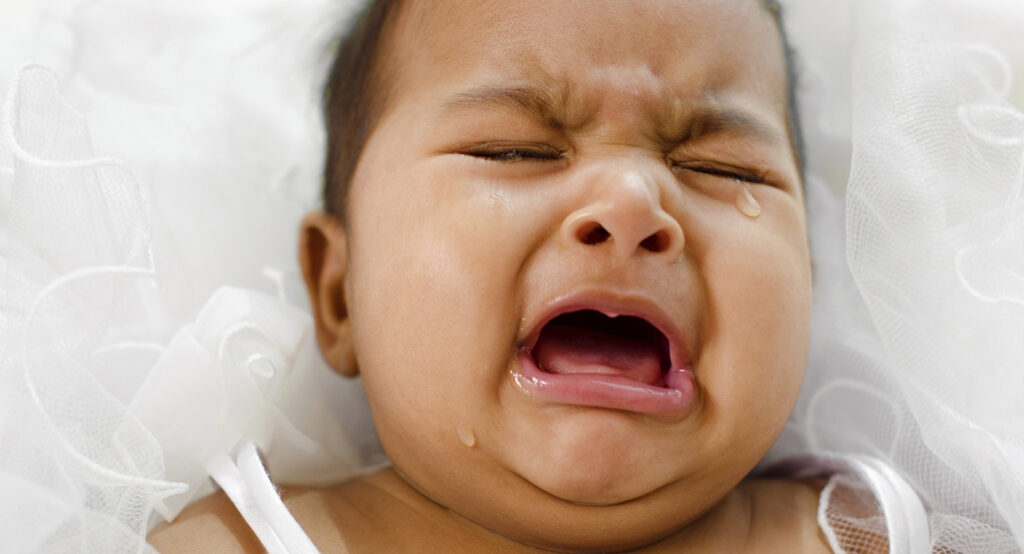
Researchers at the University of Saint-Etienne in France used thermal imaging technology to track participants’ reactions while they listened to recordings of infant cries. The study, published in the Journal of The Royal Society Interface, found that adults’ faces grew warmer when babies wailed, suggesting an instant physiological response.
Babies’ Cries Trigger the Body’s Stress Response
The findings showed that the effect was strongest when babies were in severe distress, producing what scientists call “acoustic roughness” chaotic, disharmonious sounds known as nonlinear phenomena (NLP).
“The emotional response to cries depends on their acoustic roughness,” said Prof Nicolas Mathevon, lead researcher. “We are emotionally sensitive to the acoustic features that indicate a baby’s level of pain.”
When infants are in significant pain, they contract their rib cages more forcefully, producing higher air pressure that creates chaotic vibrations in their vocal cords. This results in dissonant sounds that humans are hardwired to recognise and respond to, an evolutionary mechanism designed to protect vulnerable infants.
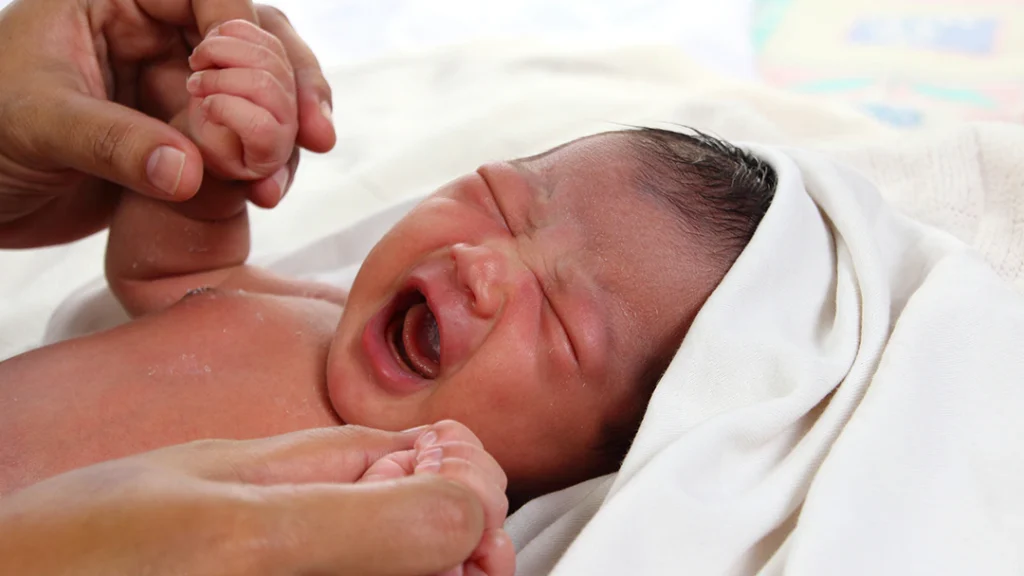
Men and Women Respond the Same
The study monitored men and women with little or no experience caring for babies. Participants listened to 16 different recordings of infant cries, ranging from mild discomfort, such as bath-time fussiness to high-pain situations, including vaccinations.
Thermal imaging revealed that both men and women reacted similarly, showing no significant differences in their emotional or physical responses. Cries with the highest levels of NLP triggered the most intense physiological changes and were consistently rated as signs of severe pain.
Study Challenges Gender Stereotypes
The findings contradict the common belief that women are more responsive to baby cries. A related Danish study also found that men are just as likely as women to wake up when a baby cries at night, even though mothers are still three times more likely to get up and soothe the child.
“This research is innovative,” said Prof Christine Parsons, who led the Danish study. “People often assume men and women respond differently to crying, but the evidence shows otherwise.”