
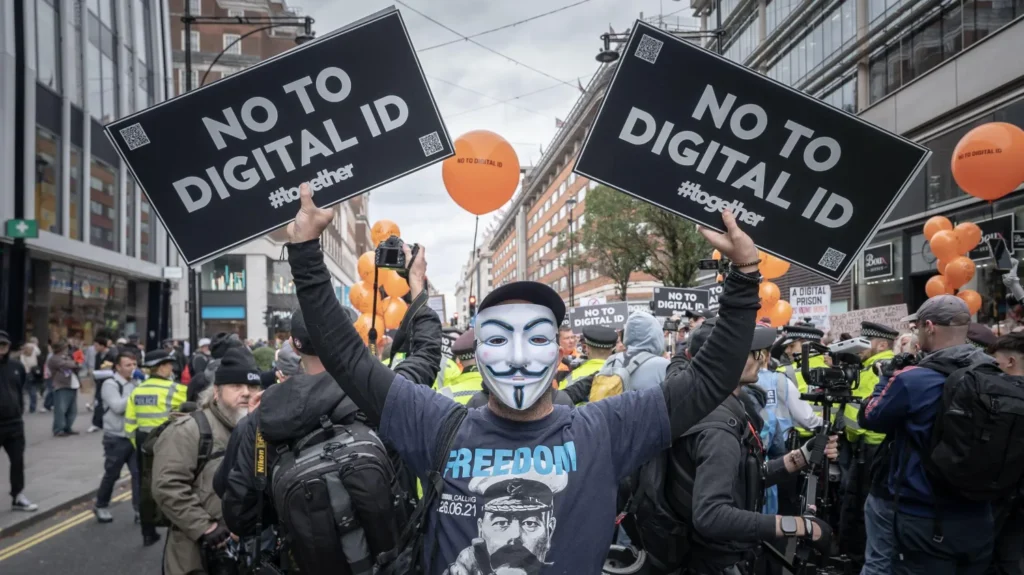
Prime Minister Sir Keir Starmer has pledged that digital ID will not be mandatory for NHS access, insisting it will only apply to right-to-work checks as part of efforts to tackle illegal immigration and cut bureaucracy.
Digital ID to Remain Voluntary, Except for Right-to-Work Checks
Prime Minister Sir Keir Starmer has moved to reassure the public that the government’s planned digital ID scheme will never be required to access NHS services, insisting that participation will remain voluntary for most citizens.
Speaking to the BBC, Starmer said the only mandatory use of digital ID would be for verifying the right to work in the UK, a measure he says is necessary to tackle illegal immigration.
“Apart from the right to work and having digital ID, it won’t be mandatory,” Starmer said. “You’ll never need ID to get into a hospital or anything like that. And for people who simply don’t want it, well, they don’t need it.”
Digital ID Framed as Way to ‘Cut the Faff’
While the prime minister initially presented the proposal as an immigration measure, he is now pitching digital ID as a convenience tool to simplify daily life and reduce administrative costs.
He argued the system would make processes like applying for schools, securing a mortgage, or verifying identity faster and more affordable.
“I think most people will see it as a way to cut the faff, instead of rummaging around for paper documents or paying £85 to prove who you are, you’ll be able to do it securely from your phone,” Starmer said.
He compared the concept to the evolution of digital banking, suggesting that public scepticism would fade once people experienced the convenience first-hand.

Labour Faces Internal and External Criticism
The proposal has faced criticism from opposition parties and unease among some Labour MPs, who questioned whether the plan was primarily focused on migration control or public convenience.
Ministers have also been under pressure to clarify that police will not have powers to stop people and demand identification. Concerns persist that the scope of mandatory use could expand over time, despite Starmer’s assurances.
Starmer Dismisses Fears of Surveillance and Costs
Starmer insisted that the digital ID system would not be used for surveillance and would feature “very strong encryption” to protect users’ data.
He also dismissed fears of costly contracts with US technology firms, arguing that international evidence shows such systems can reduce fraud and save money.
“Digital ID is a much more secure form of identification. The evidence from other countries is that it actually cuts costs and prevents fraud, rather than adding expense,” he said.
The government has yet to confirm who will administer the scheme or when it will be introduced.