
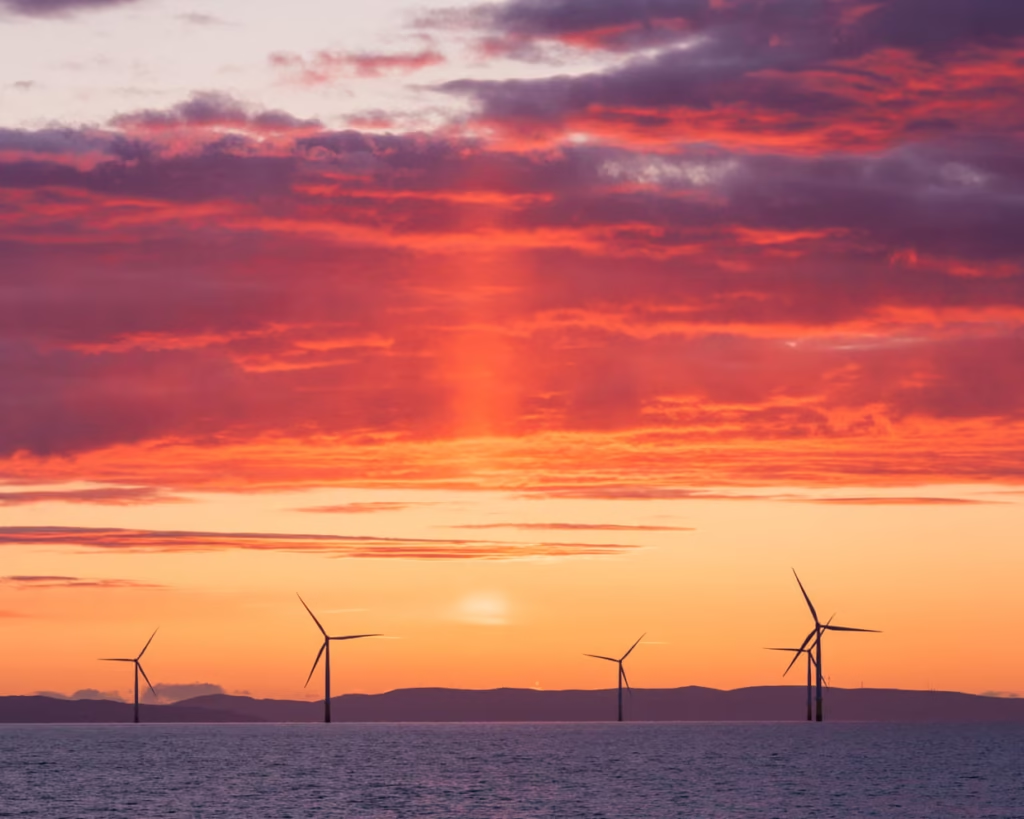
The environmental group claims the estate which owns the seabed around England, Wales, and Northern Ireland has been prioritising profit over public interest by charging renewable energy developers increasingly high fees to lease areas for wind farm construction.
According to Greenpeace, the approach has inflated costs for clean energy firms while boosting the Crown Estate’s profits and, by extension, the royal household’s income. The estate made £1.1 billion in profit in the year to March, more than double its earnings two years ago.
Will McCallum, co-executive director of Greenpeace UK, accused the Crown Estate of “milking for profit” a vital public resource.
“The seabed should be managed for the nation and the common good, not as an asset to be milked for profit and outrageous bonuses,” McCallum said. “If this issue isn’t resolved before the next auction, we may need to let a court decide whether what’s happening is lawful.”
The group argues that the Crown Estate has a legal duty not to exploit its monopoly ownership of the seabed and is now breaching that obligation by rationing access to maintain high prices a move Greenpeace says could hinder the UK’s offshore wind expansion.
In response, a Crown Estate spokesperson said Greenpeace had “misunderstood” how leasing works.
“Option fees are not fixed by the Crown Estate. They are set by developers through competitive auctions and reflect market demand at the time,” the spokesperson said. “As our net revenue goes to the Treasury, these fees help ensure taxpayers benefit from the development of the seabed.”
The Crown Estate insists it is accelerating offshore wind development in line with government policy to strengthen energy security and meet climate goals.
The dispute comes as the UK seeks to quadruple offshore wind capacity by 2030. Around 12% of the Crown Estate’s profits are allocated to the monarchy, a figure that was cut from 25% in 2023 following record earnings from wind projects.