

Data obtained by Citizens Advice under freedom of information laws shows that at least 800,000 households on universal credit are having money deducted from their monthly payments to repay loans taken to survive the five-week wait for their first benefits.
The charity’s analysis found that over 500,000 children are affected, with an estimated £143 million clawed back from struggling families last year alone.
Campaigners and MPs have urged the government to turn the loans into grants in the upcoming Autumn Budget, calling it a necessary step to end the “debt trap” faced by low-income families.
Tina, a claimant from Kent who recently migrated from employment support allowance to universal credit, said the experience had been “horrible”. Now four weeks into her wait, she has just £3.75 left and says her mental health has worsened.
“Before the debt gets too high, I want to pay the bills off that are coming in. I want to get fresh food in. I want to put some money on my gas and electric. But I can’t,” she said.
“I sit here in the evening and think, ‘No, I won’t put the lights on.’ Even my phone isn’t going to last much longer, but I haven’t got the money to even order a new cable.”
Tina, who did not want her surname used, is now £240 in debt and relies on a community café for food and support. Christians Against Poverty (CAP), which is advising her, described the five-week wait for first payments as “devastating”.
Under current rules, claimants can request an advance payment to cover the waiting period. The advance is typically the full value of a person’s universal credit entitlement and is later repaid through automatic deductions, leaving many unable to afford basic essentials.
Labour MP for Liverpool Riverside, Kim Johnson, said the system was “trapping hundreds of thousands of children in poverty.”
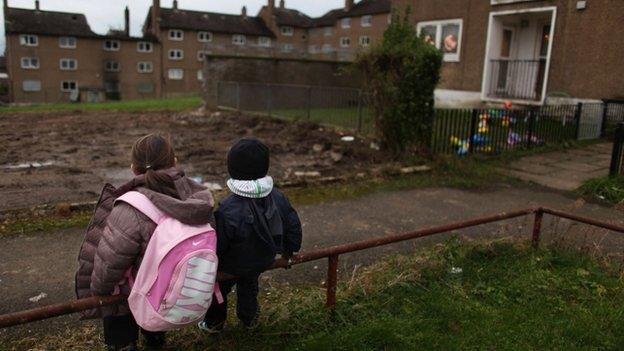
“Once again, we see the government pushing the cost of its broken welfare system onto the very families who can least afford it,” she said. “Forcing people to take out loans just to survive the five-week wait for universal credit is unacceptable. These loans must be turned into grants in the Autumn Budget.”
Dame Clare Moriarty, chief executive of Citizens Advice, said the findings showed how universal credit is “failing to provide a safety net.”
“The five-week wait for universal credit is forcing many families into debt to the government before they’ve even received their first payment,” she said. “We’re helping parents relying on food banks because of it. Universal credit was meant to provide stability, not trap people in debt from day one.”
She called on the chancellor, Rachel Reeves, to replace the loans with grants, saying: “No family should have to borrow money just to eat while waiting for support they’re entitled to.”
Children’s commissioner Dame Rachel de Souza added: “These statistics show that many families are being forced to make impossible choices just to provide for their children. Almost a million households are trapped in what can feel like a relentless cycle of debt as they wait five weeks for their first payment.”
She urged the government to be “ambitious” in its child poverty strategy and backed calls to end the two-child benefit limit.
Stewart McCulloch, chief executive of Christians Against Poverty, said the five-week delay was “not a glitch but a design flaw.”
“It forces new claimants to survive more than a month with no income or to begin their claim already in debt,” he said.
The figures, from February 2025, remain consistent month to month and are considered representative of current levels of debt among universal credit households.
A DWP spokesperson said: “Advances are not loans and so no interest is charged, nor any enforcement action taken. They are available for new and existing customers who urgently need support.
“We are reviewing universal credit to make sure it is doing the job we want it to. We are committed to considering how we can support people during the initial assessment period, often referred to as the five-week wait, and will provide an update in due course.”