
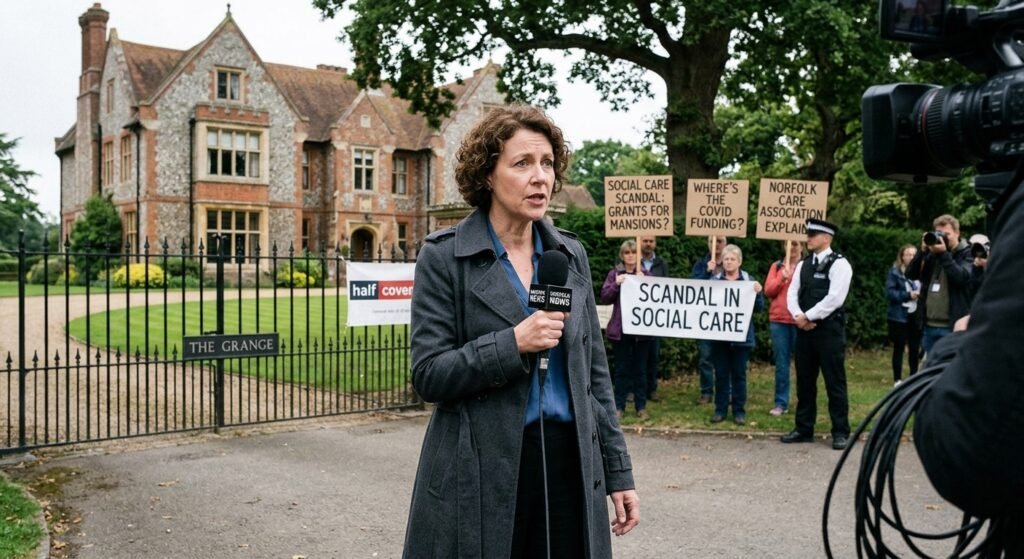
As care homes across the United Kingdom faced unprecedented strain during the COVID-19 pandemic, public relief funds were established to protect vulnerable residents and frontline staff. However, shocking details from a forensic investigation report reveal that a prominent board member and founder of the Norfolk Care Association allegedly diverted ring fenced government grants to fund a luxury kitchen installed in a private residential mansion.
Diverting Pandemic Relief for Private Luxury
The investigation highlights how public health funds intended for coronavirus infection control measures such as enhanced sanitization and safety equipment were manipulated behind closed doors.
Bullet The Kitchen Con: Documents and internal emails show that the care executive directed a kitchen supplier’s invoice to be doubled and split across multiple care homes under his control.
Bullet Explicit Instructions: He explicitly instructed via email that the deposits were “to be paid for by the infection control fund”.
Bullet Re-routing Funds: Rather than funding frontline safety protocols, funds were rapidly readdressed to pay for a high end kitchen fitted at a private residential property.
Bullet Funneling Care Home Grants: Care homes within his network funneled thousands of pounds carrying explicit Adult Social Care Infection Control Fund references straight into corporate accounts, which immediately disbursed the funds to contractors and personal accounts.
Public Advocacy Versus Private Actions
The revelations are particularly damning given the individual’s public profile. While lobbying media outlets and government officials for increased financial support and emergency aid for struggling care providers, internal company records indicate he was systematically misdirecting emergency health grants and hiding private construction costs behind fake invoices attributed to a vacant, non-operational industrial site in Attleborough.
Investigators note that these actions if upheld in court support serious potential allegations of false accounting, fraud by false representation, and cheating the public revenue. The scandal raises profound questions regarding governance, oversight, and accountability among leading figures within regional care associations.