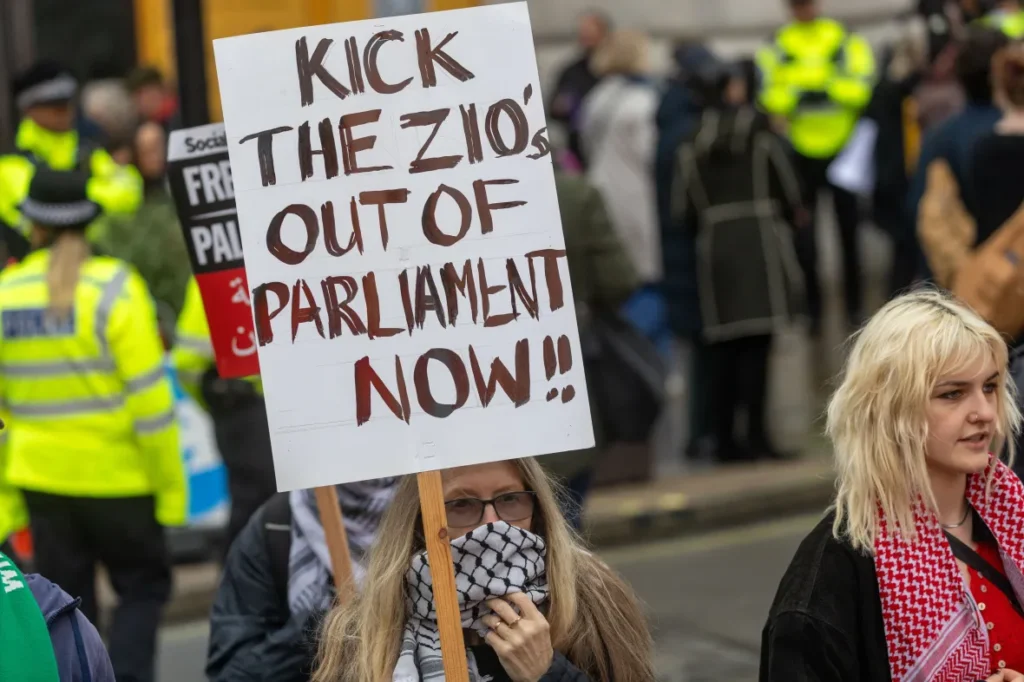
The controversy follows a joint statement issued on Wednesday by Sir Mark Rowley, commissioner of the Metropolitan Police, and Sir Stephen Watson, chief constable of Greater Manchester Police (GMP), who said their forces would adopt a “more assertive” approach to slogans that cause fear within Jewish communities.
Within hours of the announcement, the Metropolitan Police arrested four people at a rally in central London on suspicion of racially aggravated public order offences after allegedly shouting slogans “involving calls for intifada”.
The term “intifada”, Arabic for “rebellion”, refers to Palestinian uprisings against Israeli occupation. Critics argue that phrases such as “globalise the intifada” amount to a call for violence against Jews, particularly in the context of heightened tensions and recent attacks.
Rowley and Watson said they had previously been advised by the Crown Prosecution Service (CPS) that many chants did not meet prosecution thresholds. However, they said the context had changed.
“Words have meaning and consequence,” they said. “Those using such slogans at future protests should expect the Met and GMP to take action. We will act decisively and make arrests.”
However, several major police forces—including West Midlands, Hampshire, Devon & Cornwall and Staffordshire—declined to say whether they would follow suit when contacted. Instead, they issued carefully worded statements emphasising case-by-case assessments.
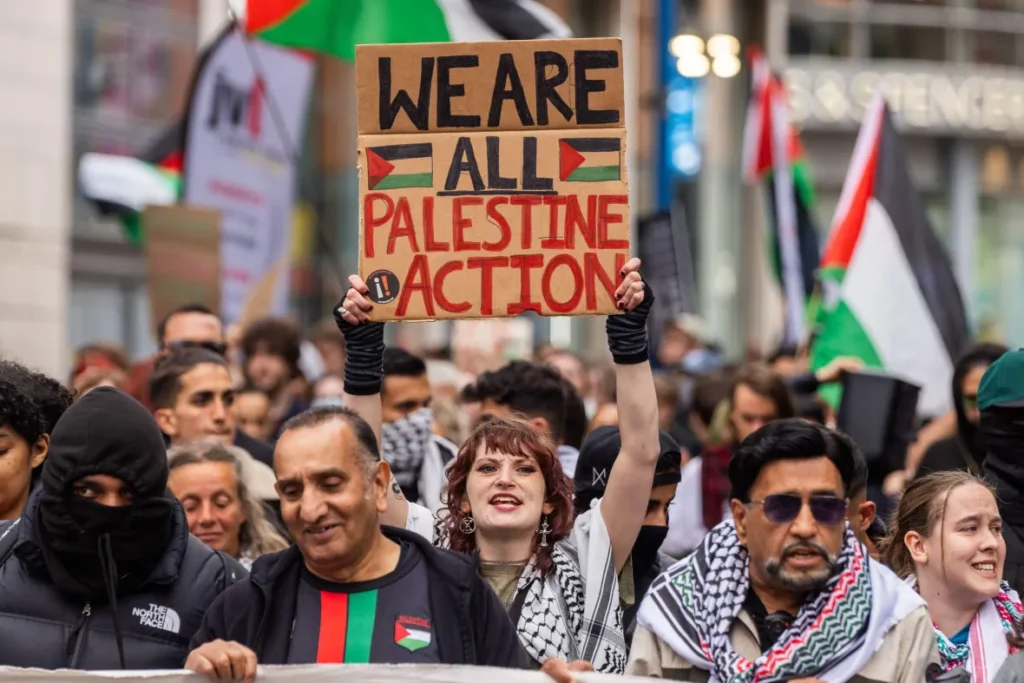
Chris Philp, the shadow home secretary, said all police forces “must arrest every person calling for intifada or jihad”. He warned: “If chants calling for jihad and intifada are tolerated, then extremist violence and antisemitism will inevitably follow.”
The Campaign Against Antisemitism accused police leaders of a lack of national direction. “You can be arrested for something in one county while your friend does it with impunity down the road,” the group said. “This is two-tier policing taken to absurd levels.”
Jess Phillips, the safeguarding minister, said forces should follow the Metropolitan Police’s lead, calling the chant “incitement to violence”. “The right to protest is sacrosanct,” she said, “but it cannot include causing fear or encouraging violence.”
West Midlands Police said action would be taken if chanting appeared intended to incite violence or racial hatred, while Devon & Cornwall Police said offences would be investigated but not necessarily result in immediate arrests. Several other forces issued similar statements.
Gavin Stephens, chair of the National Police Chiefs’ Council, is understood to support Rowley and Watson’s stance, telling chief constables they were free to adopt similar approaches if they believed it appropriate.
The debate comes amid a sharp rise in antisemitic offences. Prosecutions for racial hate crime increased by 16 per cent to 11,036 in the year to June, while religious hate crime prosecutions rose by 58 per cent to 717.
Lionel Idan, the CPS’s chief crown prosecutor for hate crime, said authorities were working closely with police and communities to identify and prosecute antisemitic offences and would continue to explore further action.