
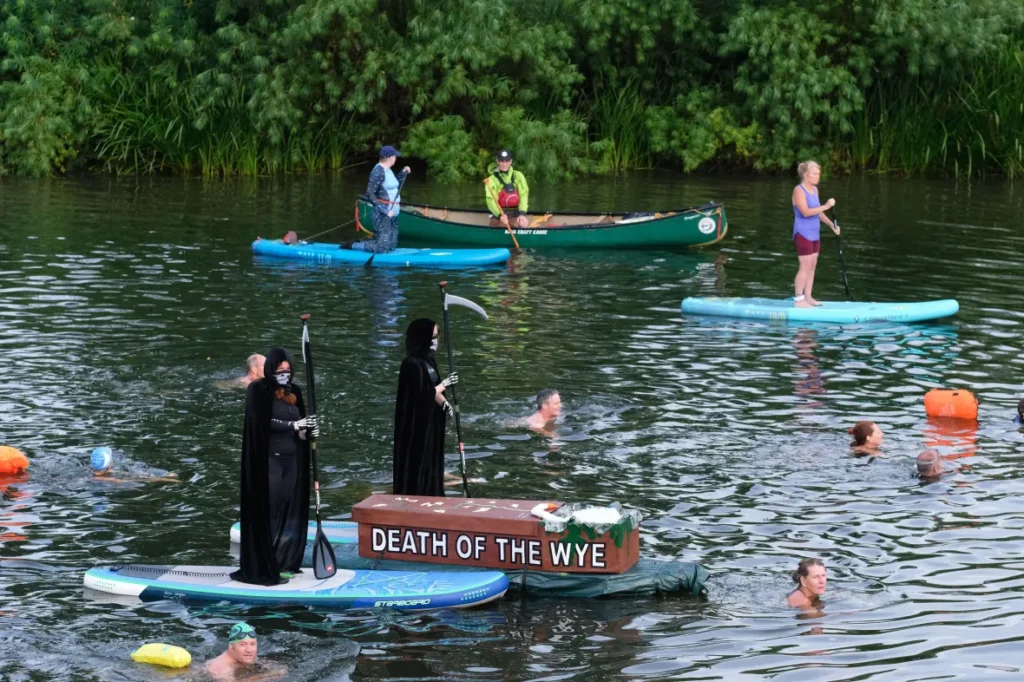
In a landmark case, almost 4,000 residents and business owners are seeking substantial damages and a legally mandated clean up order against Avara Foods, which supplies chicken to Tesco, its subsidiary Freemans of Newent, and Welsh Water.
The claim, led by law firm Leigh Day, accuses the defendants of long term pollution that has damaged the river’s ecosystem and impacted livelihoods across Wales and south west England. The firm described the case as the “last avenue for justice,” arguing that government bodies and regulators had failed to protect the river and its tributaries, the River Usk and the River Lugg.
A Once Thriving River in Decline
The River Wye was once famous for its salmon fishing, attracting anglers from around the world. However, in recent years its ecological status has been downgraded, with experts warning of growing environmental collapse caused by waste from millions of chickens farmed in the surrounding catchment area.
The government has yet to appoint a new Wye Tsar, a role left vacant after the recent change in administration.
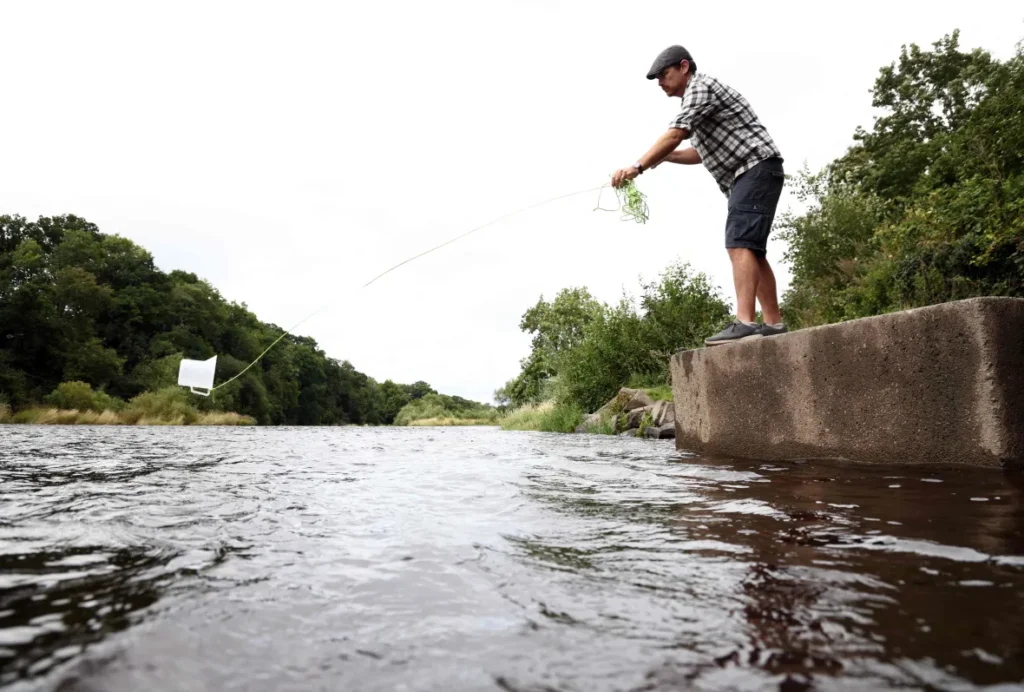
Among the 3,953 claimants are wild swimmers, anglers and local businesses who say the river’s decline has hit recreation, tourism and property values since 2019.
“My relationship with the river has completely changed in recent years, to the point I no longer feel comfortable going in it,” said Justine Evans, a film maker and claimant who has lived near the Wye since 2012. “It’s horrible to think what has happened to the wildlife it is home to. Kids are growing up seeing the river as it is now, thinking this is its normal state, but it’s just not what rivers should look like.”
A Fight for Accountability
The legal claim alleges private nuisance, public nuisance and negligence of a common law duty of care, arguing that pollution from chicken producers and the water company has caused measurable environmental and economic harm.
Leigh Day said that if successful, the payout could reach hundreds of millions of pounds. Avara alone reported a £1.3 billion turnover last year.
According to the claim, high levels of phosphorus, nitrogen and harmful bacteria have entered the Wye through the spreading of hundreds of thousands of tonnes of poultry manure from Avara’s supply chain. The pollution has triggered algal blooms that choke oxygen levels, suffocate fish and pose health risks to animals.
Welsh Water is also accused of contributing to the damage through sewage spills and the spreading of sewage sludge from treatment plants on farmland.
“The claimants have watched their rivers become the subject of national press coverage, public campaigns and government promises,” said Oliver Holland, partner at Leigh Day. “Taking this legal step is about holding those responsible to account and protecting vital national ecosystems before it is too late.”
Industry and Company Responses
Avara has previously rejected the claims, describing the legal action as “speculative” and “without merit.” The company said it is already working to mitigate farming impact by converting manure into biochar and transporting waste out of Herefordshire.
A spokesperson said: “We share concerns about the condition of the River Wye, but this legal claim is based on a misunderstanding. No manure is stored or spread on poultry only farms that supply Avara Foods. Where poultry manure is used as fertiliser, it is for other agricultural sectors. Avara is not involved in any arable operations and has no control over this activity.”
Welsh Water said it had invested £70 million over the past five years to improve its Wye infrastructure, adding: “We intend to defend this case robustly. As a not for profit company, any payment to these claimants would reduce the amount we can reinvest in delivering improvements for all customers and the environment.”
A Wider Environmental Wake Up Call
The Wye’s collapse is part of a wider environmental crisis affecting UK rivers. Salmon catches on the Wye have been the worst on record since 1941, with similar patterns seen across England. Campaigners are urging stronger regulation and enforcement to protect waterways from agricultural and sewage pollution.
For residents who have lived by the river for generations, this legal action represents both a fight for justice and a plea for change.
As Evans put it: “It’s about reclaiming the river we once knew before it’s lost for good.”