But during an inquest into his death, Alison Lawrence, who was manager of the home at the time, declined to answer all but two questions asked by coroner Yvonne Blake.
Ms Lawrence confirmed that she was previously employed as the homes manager and that she held the role at the time of Mr Courtmans death.
However, she refused to respond to any other question asked, citing rule 22 of the Coroners Rules, which allows witnesses to refuse to answer questions that might incriminate them.
Mrs Blake asked Ms Lawrence 11 questions in total, centring around how the home cared for Mr Courtman after he was placed there by social services.
These included asking what risk assessments were carried out when his admission was accepted, whether Mr Courtmans behaviour was challenging and whether Ms Lawrence felt the home was suitable for his complex needs.
But to each, Ms Lawrence said, “I refer to rule 22.”
After the 11th and final question, Mrs Blake said, “I do not see any point in asking any further questions as it is quite clear you are not going to answer any.”
Safeguarding concerns
The inquest, which concluded on Monday after an adjournment in July, heard Mr Courtman had a complex set of needs that saw him removed from his home in Burnham Market.
He struggled with alcohol dependency and would often show challenging behaviour, including starting fires, acts of self harm and absconding from the care homes he was placed in.
Following a hospital admission in January 2021, during which he developed Covid 19, concerns were raised that he was no longer able to care for himself independently.
A diagnosis of Korsakoff Dementia was noted on his records, a form of the condition linked with heavy alcohol use, although there was no evidence of a formal diagnosis ever being made.
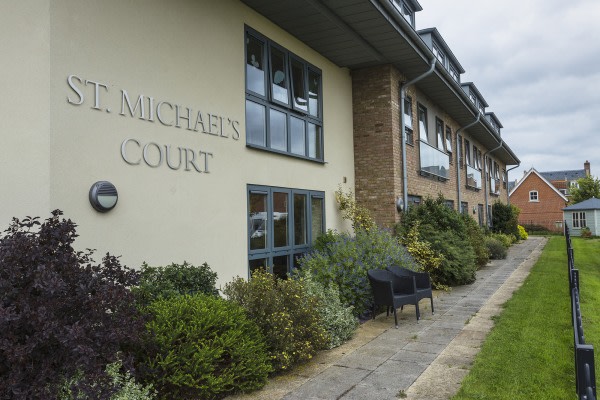
He moved into St Michaels Court in June 2021, five months before his death, after two other homes found they were unable to meet his needs.
Following his death, a safeguarding adults review was published that highlighted a host of concerns about the care he received in the community, from mental health services and from social services.
Among these concerns was that his placement at St Michaels Court was unsuitable and not risk assessed but there were little to no other options available to him.
Around the time of his death, St Michaels Court had also told social services they were struggling to accommodate him and plans were being made to move him elsewhere.
In the final months of his life, Mr Courtman had made several attempts at suicide, refused to take medication for his mental health and, on learning of the plans to move him to a new home, went on a hunger strike.
Then, on November 27 2021, he was found unresponsive in his bedroom, where he died.
Mrs Blake concluded his death was suicide, highlighting concerns around how people with his set of needs are cared for.
She said, “It seems to me there is a gap in provision, with dementia in younger people unfortunately becoming more prevalent. I am going to be writing an informal letter with my concerns about this to local mental health and social service providers.”
Do you need support? Samaritans can be reached 24/7 via 116 123. The NHS First Response Service is available via 111 option 2.